
Hephaestus (Greek deity)
Enlarge text Shrink text-
 Personality

-
Save successfulThe item can be found in your Personal ZoneשגיאהLog in to your account to save

- Wikipedia, May 17, 2018(Hephaestus (Greek: Ήφαιστος = Hēphaistos) is the Greek god of blacksmiths, metalworking, carpenters, craftsmen, artisans, sculptors, metallurgy, fire, and volcanoes. Hephaestus' Roman equivalent is Vulcan) Asturian page (Hefesto) Azerbaijani page (Hefest [in roman]) Belarusian page (Гефест = Hefest) Bulgarian page (Хефест = Khefest) Breton page (Hefaistos) Catalan page (Hefest) Czech page (Héfaistos) Spanish page (Hefesto) French page (Héphaïstos or Héphaestos) Irish page (Héafaestas) Icelandic page (Hafæstos or Hefaistos) Italian page (Efesto) Hebrew page (הפייסטוס = Hefesṭos) Latvian page (Hēfaists) Lithuanian page (Hefaistas) Hungarian page (Héphaisztosz) Japanese page (ヘーパイストス = Hēpaisutosu) Occitan page (Efèst) Uzbek page (Gefest [in roman]) Polish page (Hefajstos) Russian page (Гефест = Gefest) Albanian page (Hefesti) Slovenian page (Hefajst)
- German National Library GND, via WWW, May 17, 2018(Hephäst; variants: Hephaistos; Hephaestus; related to: Vulcanus)
- The Oxford classical dictionary, 1996:Hephaestus (Hephaestus, Greek god of fire, of blacksmiths, and of artisans; he was very early identified with Roman Volcanus and with Etruscan Sethlans) Volcanus (Volcanus (Volkanus, Vulcanus), an ancient Roman god of destructive, devouring fire, in both the human environment and in nature; in classical times he is fully identified with Hephaestus)
- Encyclopædia Britannica online, May 17, 2018(Hephaestus, Greek Hephaistos, in Greek mythology, the god of fire. Originally a deity of Asia Minor and the adjoining islands (in particular Lemnos), Hephaestus had an important place of worship at the Lycian Olympus. His cult reached Athens not later than about 600 BCE (although it scarcely touched Greece proper) and arrived in Campania not long afterward. His Roman counterpart was Vulcan)
- Capdeville, Gérard. Volcanus : recherches comparatistes sur les origines du culte de Vulcain, 1995.
- Delcourt, Marie. Héphaistos, 1957.
- Brommer, Frank. Hephaistos, 1978.


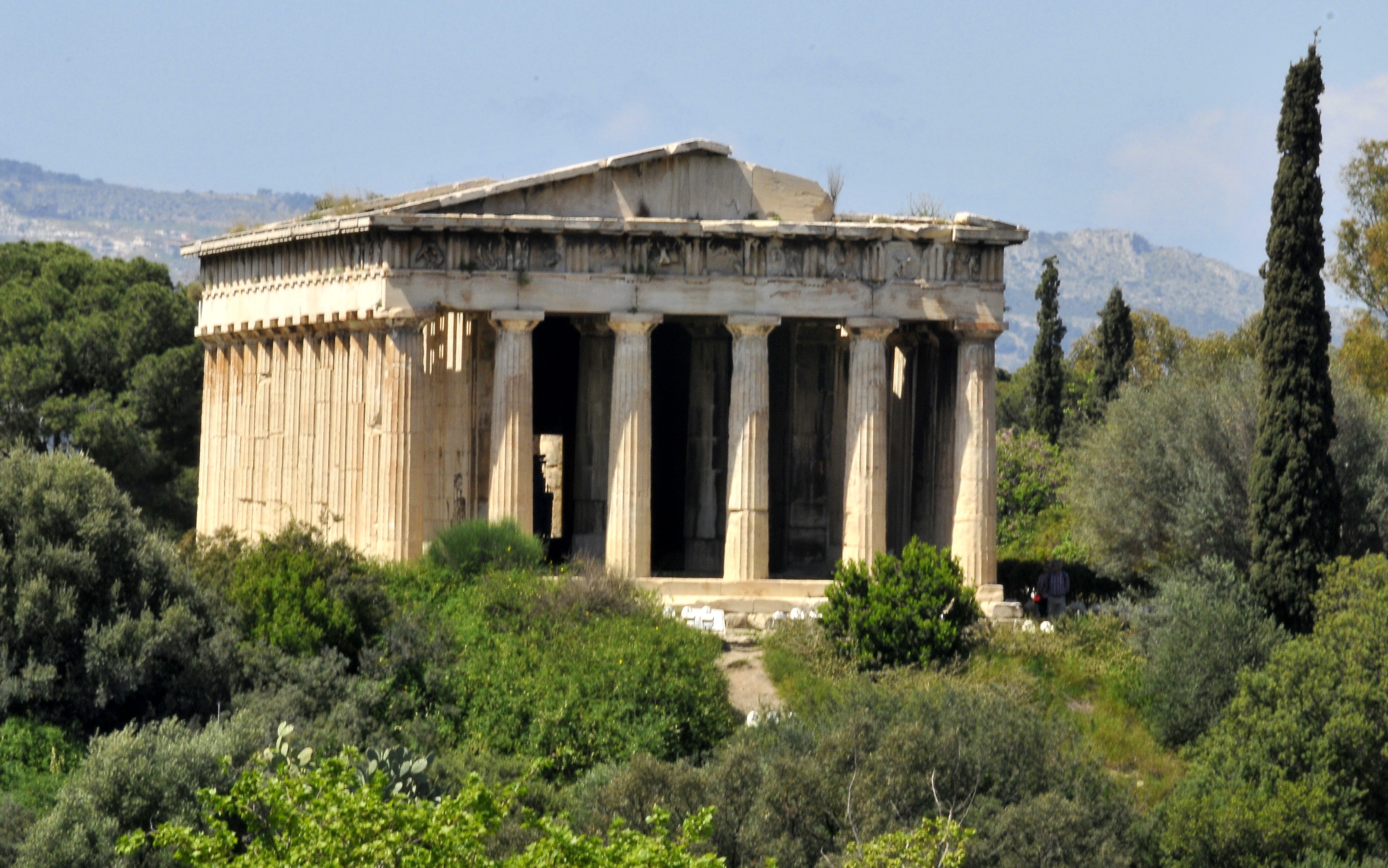

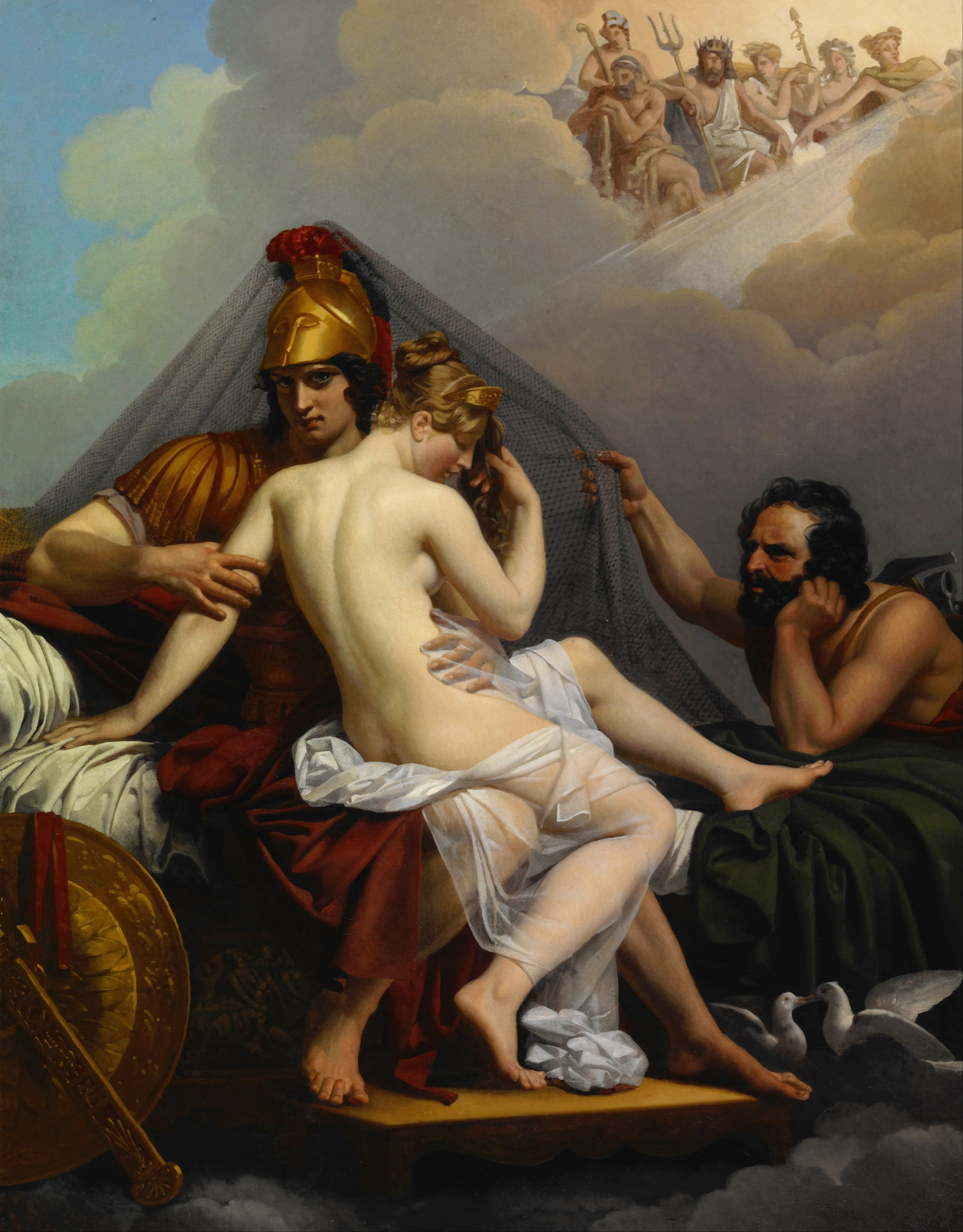


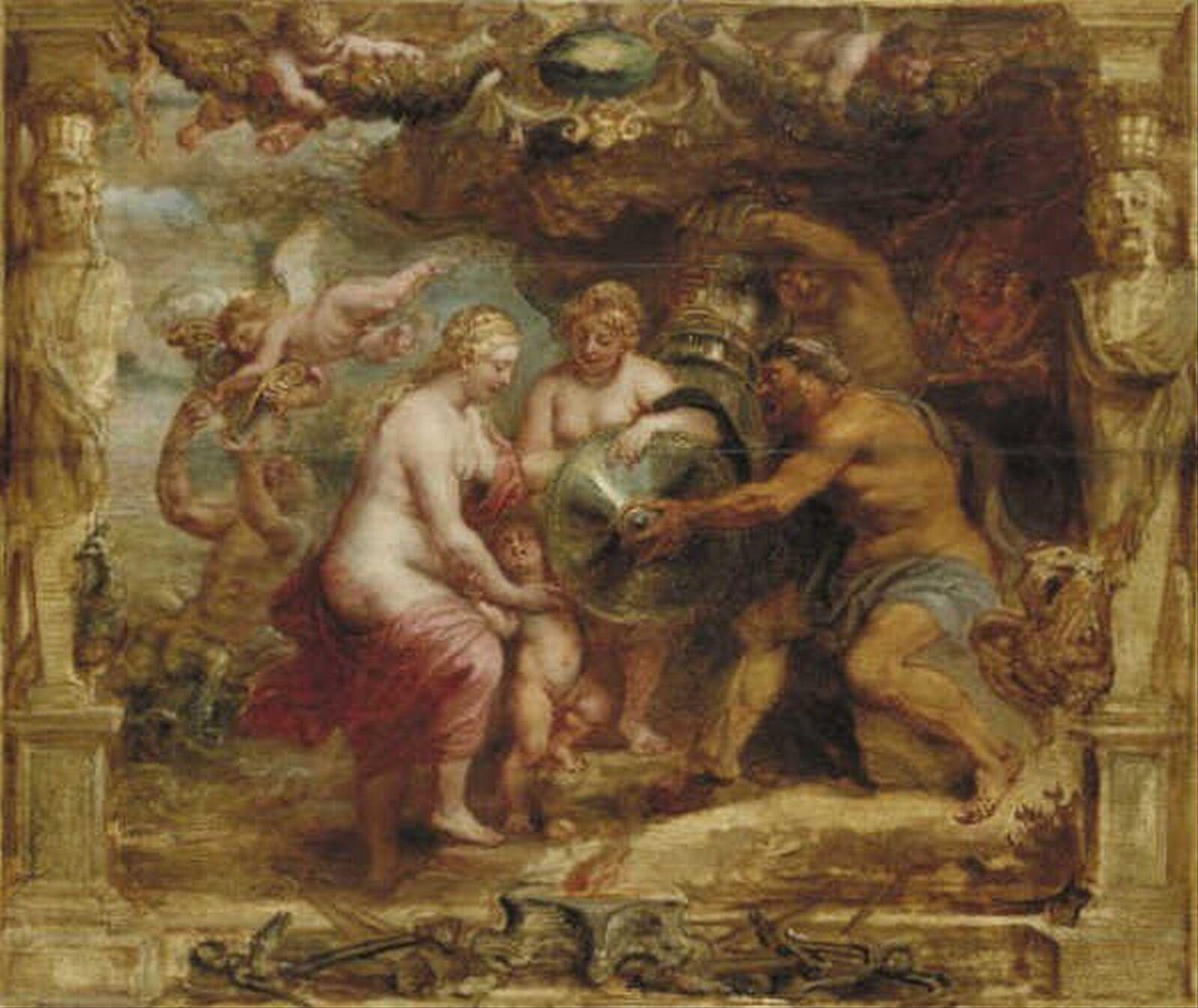
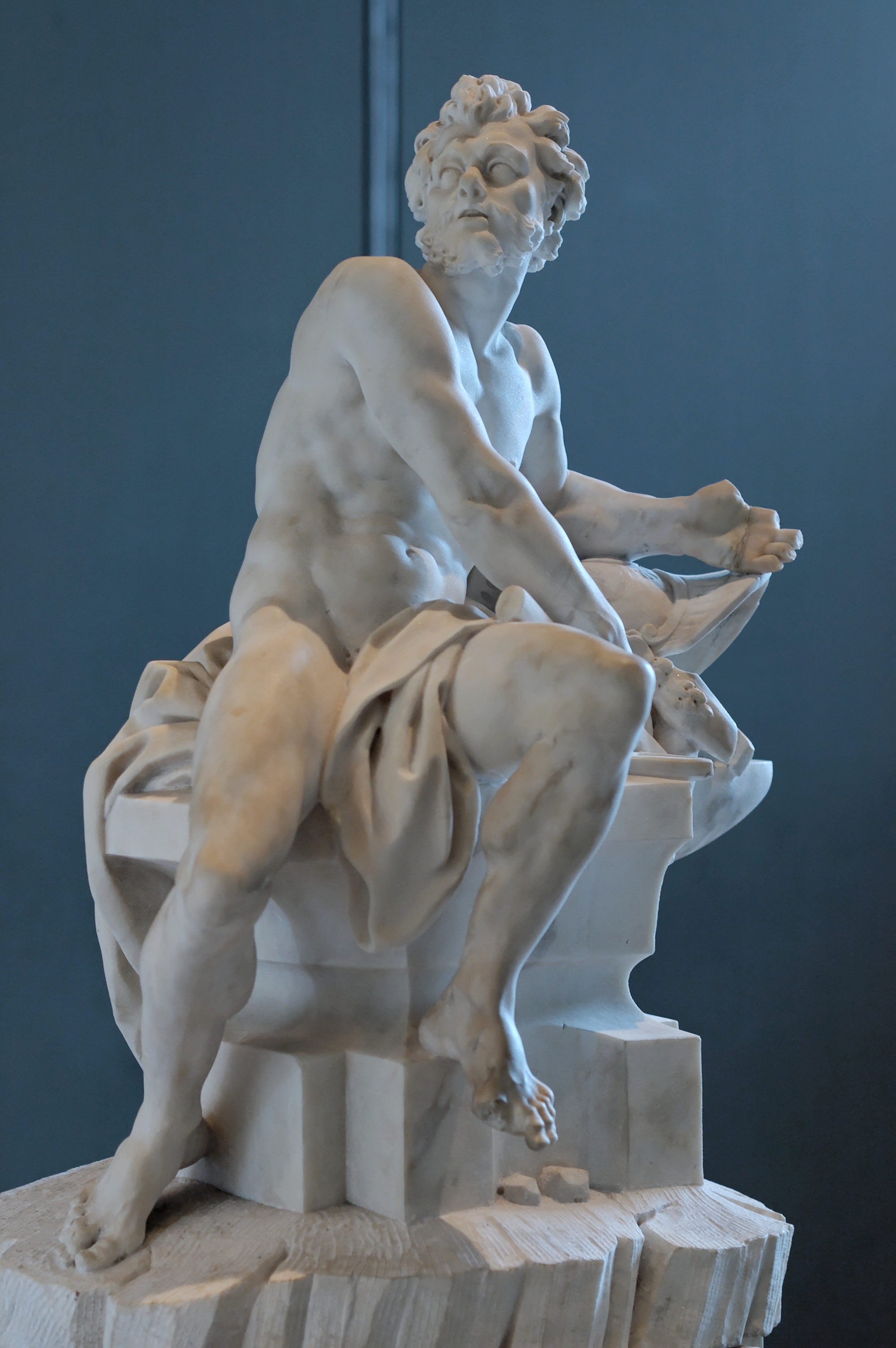
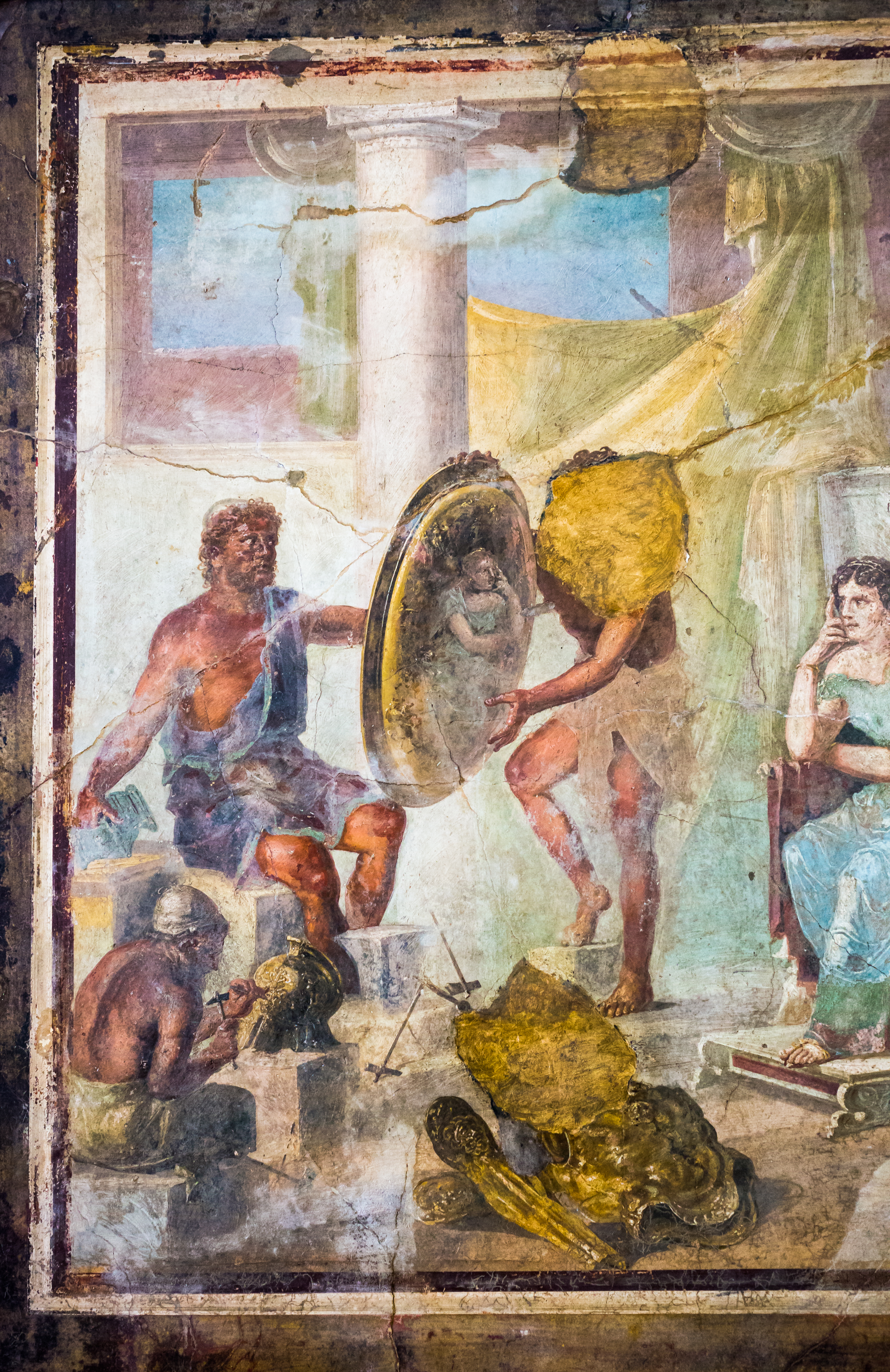
Hephaestus (UK: hih-FEE-stəs, US: hih-FES-təs; eight spellings; Ancient Greek: Ἥφαιστος, romanized: Hḗphaistos) is the Greek god of artisans, blacksmiths, carpenters, craftsmen, fire, metallurgy, metalworking, sculpture, and volcanoes. In Greek mythology, Hephaestus was the son of Hera, either on her own or by her husband Zeus. He was cast off Mount Olympus by his mother Hera because of his lameness, the result of a congenital impairment; or in another account, by Zeus for protecting Hera from his advances (in which case his lameness would have been the result of his fall rather than the reason for it). As a smithing god, Hephaestus created all the weapons of the gods in Olympus. He served as the blacksmith of the gods, and was worshipped in the manufacturing and industrial centres of Greece, particularly Athens. The cult of Hephaestus was based in Lemnos. Hephaestus's symbols are a smith's hammer, anvil, and a pair of tongs. In Rome, he was equated with Vulcan.
Read more on Wikipedia >