
Schedel, Hartmann, 1440-1514. Liber chronicarum
Enlarge text Shrink text-
 Title
Title

-
Save successfulThe item can be found in your Personal ZoneשגיאהLog in to your account to save

- Wilson, A. --The highest form of flattery--, 1982:title page (Nuremberg chronicle) page 13 (the original Nuremberg chronicle was issued by Anton Koberger in a Latin edition entitled Liber chronicarum in June, 1493)
- Goff. Third census,S-307 (Liber chronicarum)
- Geldner, F. Die deutschen Inkunabeldrucker, 1968-1970:volume 1, page 163 (Hartmann Schedels Weltchronik; Latin edition of July 12, 1493: Liber chronicarum, German edition of December 23, 1493: Buch der Chroniken)
- Posselt, Bernd. Konzeption und Kompilation der Schedelschen Weltchronik, 2015:page xiii (Schedelsche Weltchronik; issued in Latin and German versions)
- Schedel, Hartmann. Chronicle of the world, 2001.
- RA. LCN 2016


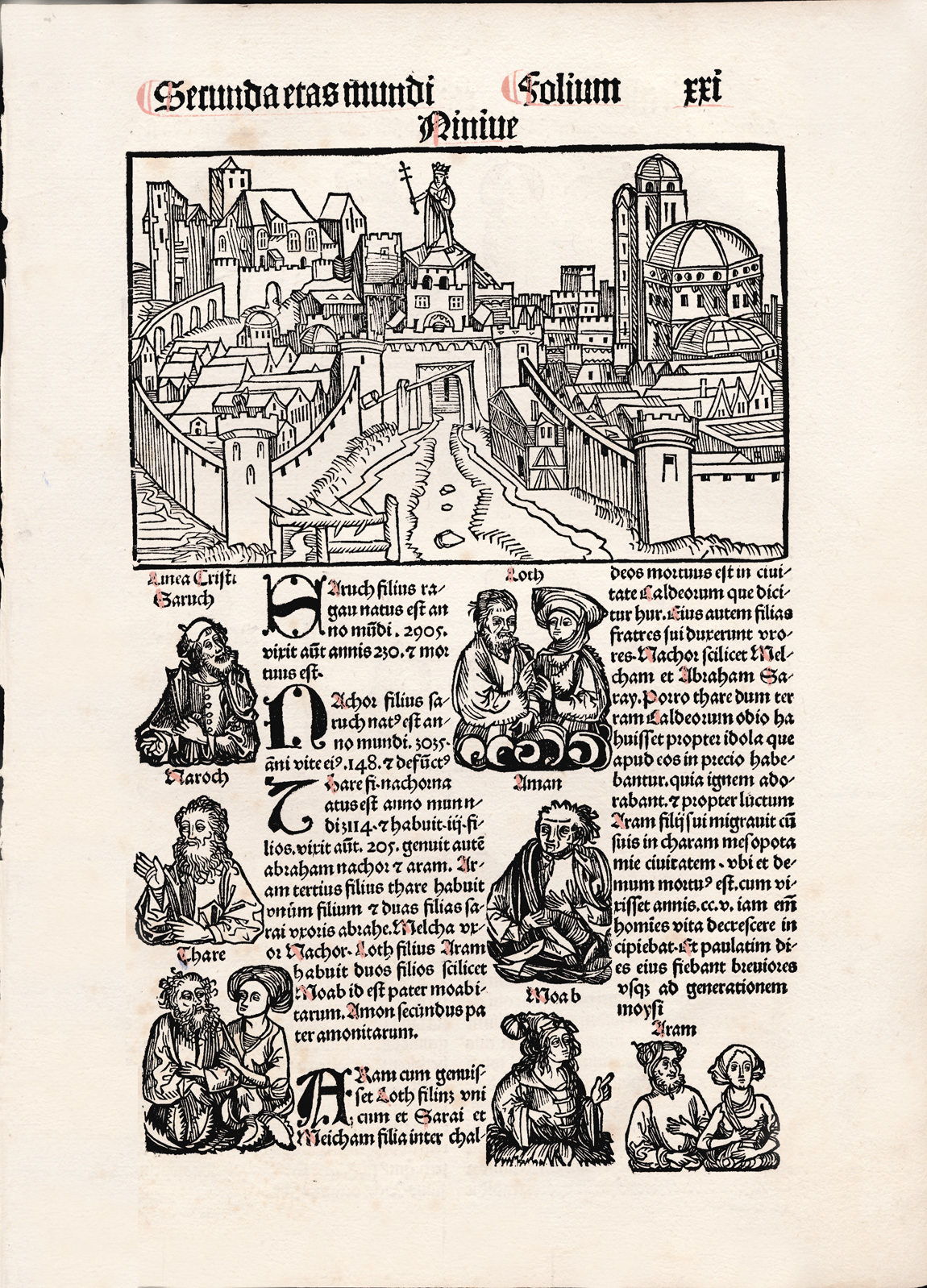

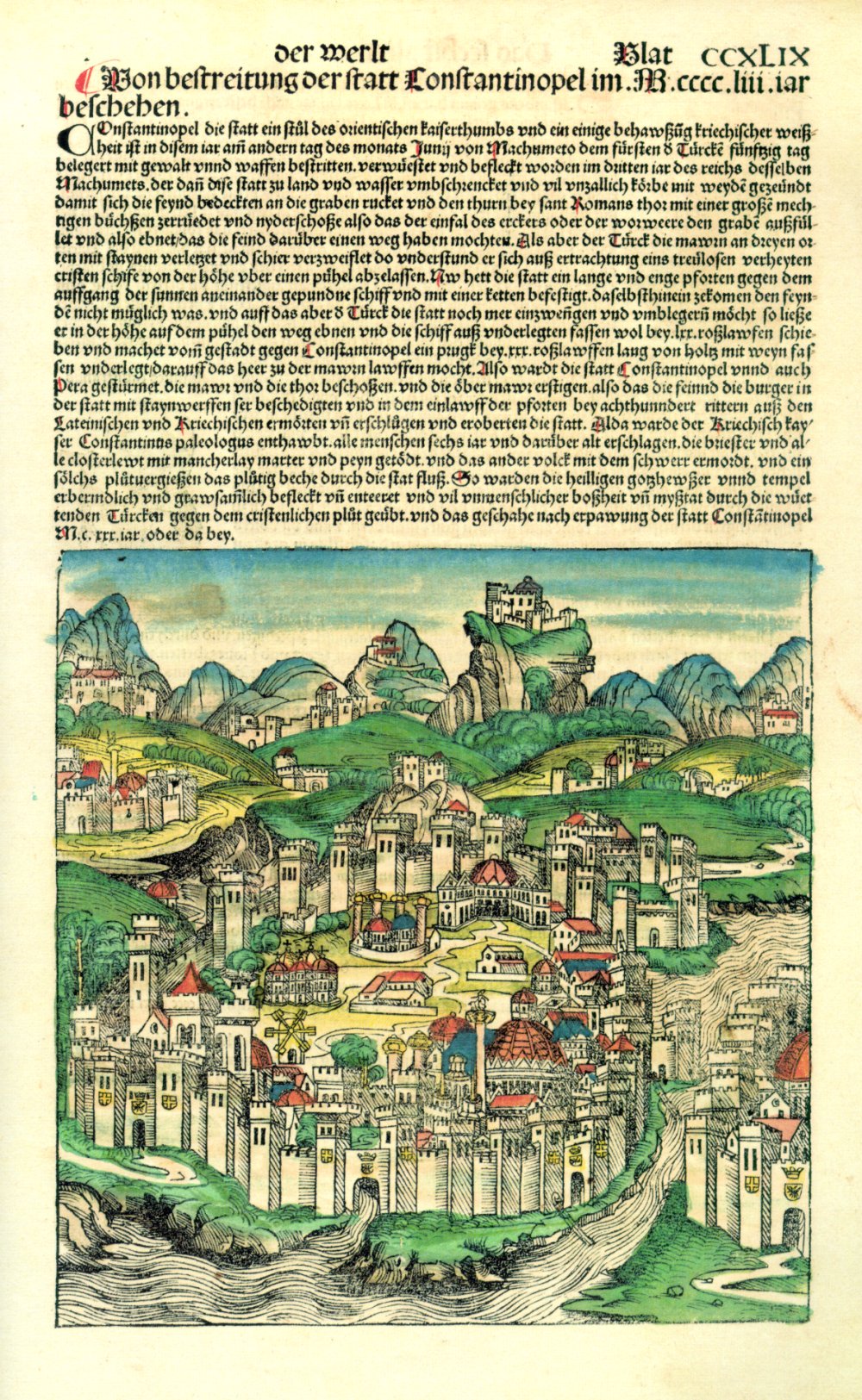
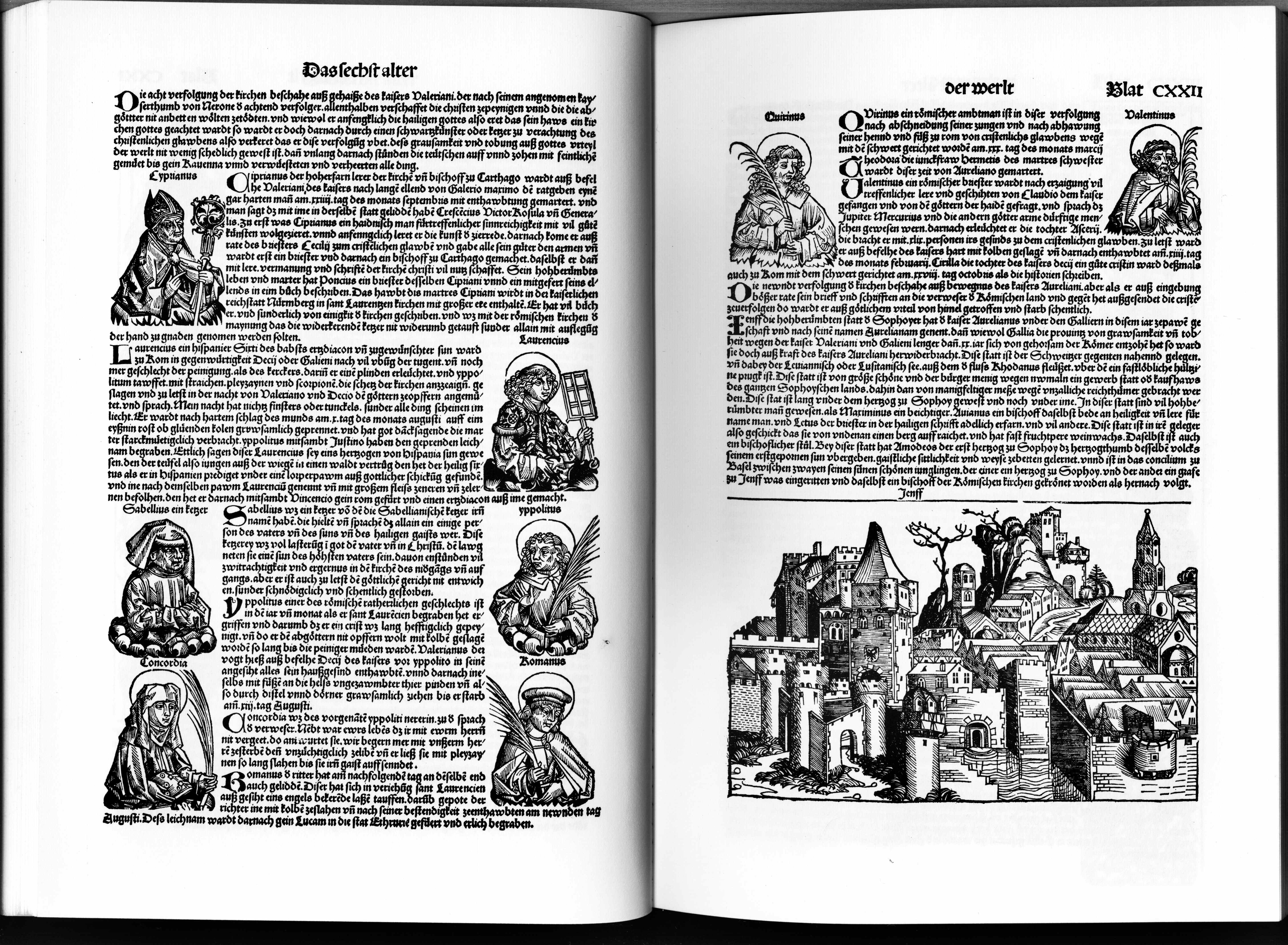
The Nuremberg Chronicle is an illustrated encyclopedia consisting of world historical accounts, as well as accounts told through biblical paraphrase. Subjects include human history in relation to the Bible, illustrated mythological creatures, and the histories of important Christian and secular cities from antiquity. Finished in 1493, it was originally written in Latin by Hartmann Schedel, and a German version was translated by Georg Alt. It is one of the best-documented early printed books—an incunabulum—and one of the first to successfully integrate illustrations and text. Latin scholars refer to it as the Liber Chronicarum ('Book of Chronicles') as this phrase appears in the index introduction of the Latin edition. English-speakers have long referred to it as the Nuremberg Chronicle after the city in which it was published. German-speakers refer to it as Schedelsche Weltchronik ('Schedel's World History') in honour of its author.
Read more on Wikipedia >