
Political realism
Enlarge text Shrink text-
 Topic
Topic

-
Save successfulThe item can be found in your Personal ZoneשגיאהLog in to your account to save

- Oxford companion to the politics of the word, 2001, via Oxford reference online, Oct. 17, 2011:Realism (Also known as Political Realism or Realpolitik, Realism remains one of the dominant schools of thought within the field of international relations. With a long intellectual pedigree, dating at least from Thucydides' (ca. 460-400 B.C.E.) history of The Peloponnesian War and the writings of Niccolo Machiavelli (1469-1527) and Thomas Hobbes (1588-1679), Realism is distinguished from contending approaches by three assumptions regarding the nature of international politics. 1. the international system is anarchic and based on the principle of self-help. 2. states are the dominant actors in world politics. Both private actors, such as multinational corporations, and intergovernmental organizations, such as the UN, exist and influence international politics. Realists assume these actors are subordinate to states. statesmen think and act in terms of interest defined as power, broadly conceived to include both material and psychological, military and economic capabilities. The "national interest," in this view, is to maximize power. Because power exists only relationally, it follows that world politics is inherently conflictual; all countries cannot increase their power or satisfy their national interests simultaneously. States act, first and foremost, to maximize security. Contemporary Realists, often called Neorealists or Structural Realists, have sought to inject greater theoretic rigor by defining concepts more clearly and deriving testable hypotheses)
- Korab-Karpowicz, W. Julian. Political realism in international relations, 2010, in Stanford encyclopedia of philosophy WWW site, Oct. 17, 2011:(Realism, also known as political realism, is a view of international politics that stresses its competitive and conflictual side. It is usually contrasted with idealism or liberalism, which tends to emphasize cooperation. Realists consider the principal actors in the international arena to be states, which are concerned with their own security, act in pursuit of their own national interests, and struggle for power. The negative side of the realists' emphasis on power and self-interest is their skepticism regarding the relevance of ethical norms to relations among states. National politics is the realm of authority and law, whereas international politics, they sometimes claim, is a sphere without justice, characterized by active or potential conflict among states)
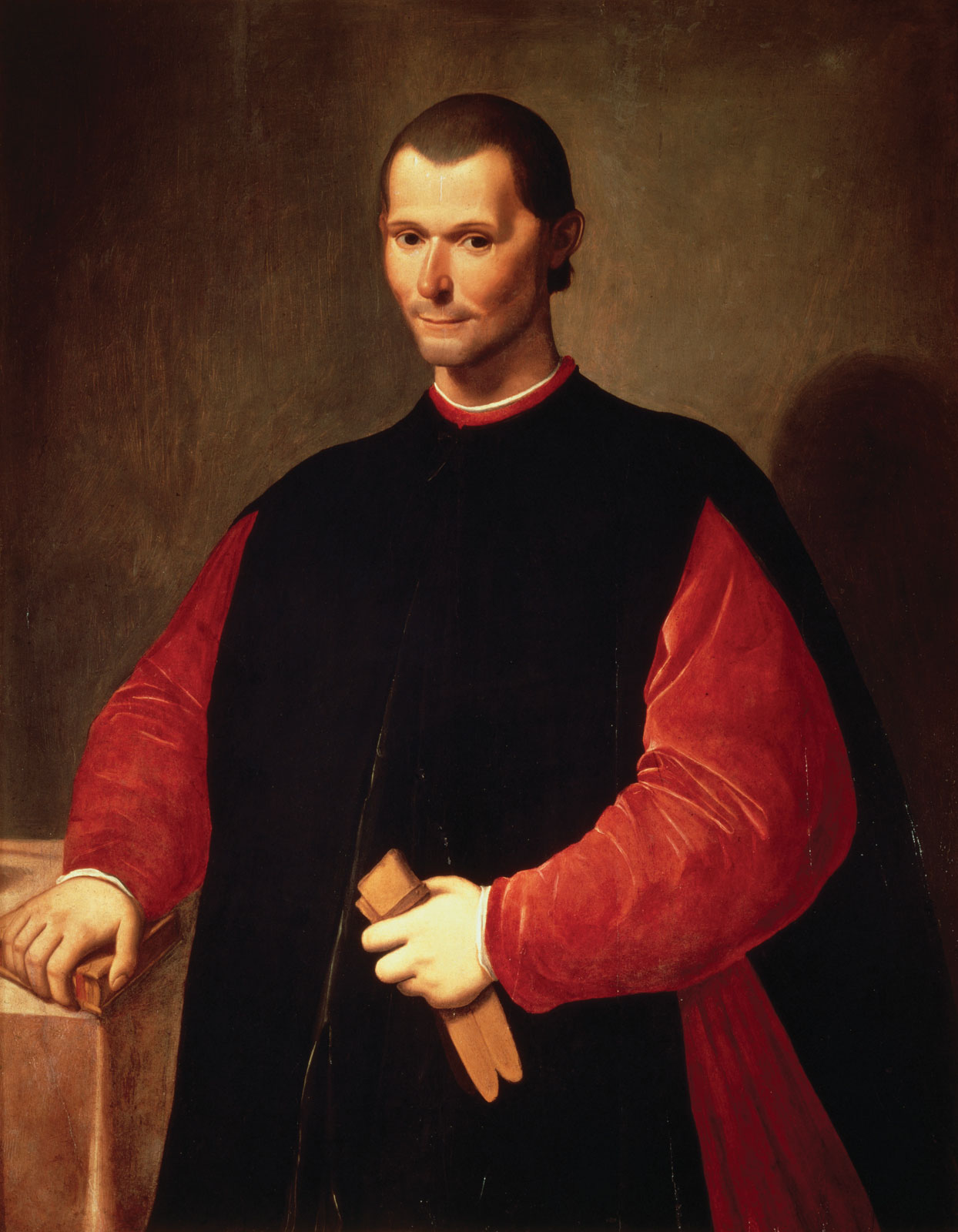
Realism, in international relations theory, is a theoretical framework that views world politics as an enduring competition among self-interested states vying for power and positioning within an anarchic global system devoid of a centralized authority. It centers on states as rational primary actors navigating a system shaped by power politics, national interest, and a pursuit of security and self-preservation. Realism involves the strategic use of military force and alliances to boost global influence while maintaining a balance of power. War is seen as inevitably inherent in the anarchic conditions of world politics. Realism also emphasizes the complex dynamics of the security dilemma, where actions taken for security reasons can unintentionally lead to tensions between states. Unlike idealism or liberalism, realism underscores the competitive and conflictual nature of global politics. In contrast to liberalism, which champions cooperation, realism asserts that the dynamics of the international arena revolve around states actively advancing national interests and prioritizing security. While idealism leans towards cooperation and ethical considerations, realism argues that states operate in a realm devoid of inherent justice, where ethical norms may not apply. Early popular proponents of realism included Thucydides (5th century BCE), Machiavelli (16th century), Hobbes (17th century), and Rousseau (18th century). Carl von Clausewitz (early 19th century), another contributor to the realist school of thought, viewed war as an act of statecraft and gave strong emphasis on hard power. Clausewitz felt that armed conflict was inherently one-sided, where typically only one victor can emerge between two parties, with no peace. Realism became popular again in the 1930s, during the Great Depression. At that time, it polemicized with the progressive, reformist optimism associated with liberal internationalists like U.S. President Woodrow Wilson. The 20th century brand of classical realism, exemplified by theorists such as Reinhold Niebuhr and Hans Morgenthau, has evolved into neorealism—a more scientifically oriented approach to the study of international relations developed during the latter half of the Cold War. In the 21st century, realism has experienced a resurgence, fueled by escalating tensions among world powers. Some of the most influential proponents of political realism today are John Mearsheimer and Stephen Walt.
Read more on Wikipedia >