
Baccharis
Enlarge text Shrink text-
 Topic
Topic

-
Save successfulThe item can be found in your Personal ZoneשגיאהLog in to your account to save

- Work cat.: Müller, J. Systematics of Baccharis (Compositae-Astereae) in Bolivia, including an overview of the genus, c2006:p. 1 (Baccharis L., one of the classical large genera of the Astereae, belongs to the taxonomically most difficult groups within the sunflower family (Compositae))
- GRIN taxonomy, via WWW, July 3, 2006(Genus: Baccharis L. Family: Asteraceae. Altfamily: Compositae. Synonyms: Achyrobaccharis, Baccharidastrum, Molina, Pseudobaccharis, Psila; probable synonyms: Neomolina, Pingraea)
- Plants database, via WWW, July 3, 2006(Baccharis L. Common name: baccharis. Family: Asteraceae)
- Names in current use for extant plant genera, via WWW, July 3, 2006(Baccharis (Dicotyledones: Compositae))
- HortiPlex plant database, via WWW, July 3, 2006(Genus: Baccharis. Common name: baccharis, groundsel tree, poverty weed)
- Plant Press dict. of common names, via WWW, July 3, 2006(Baccharis - Groundsel Tree (various))

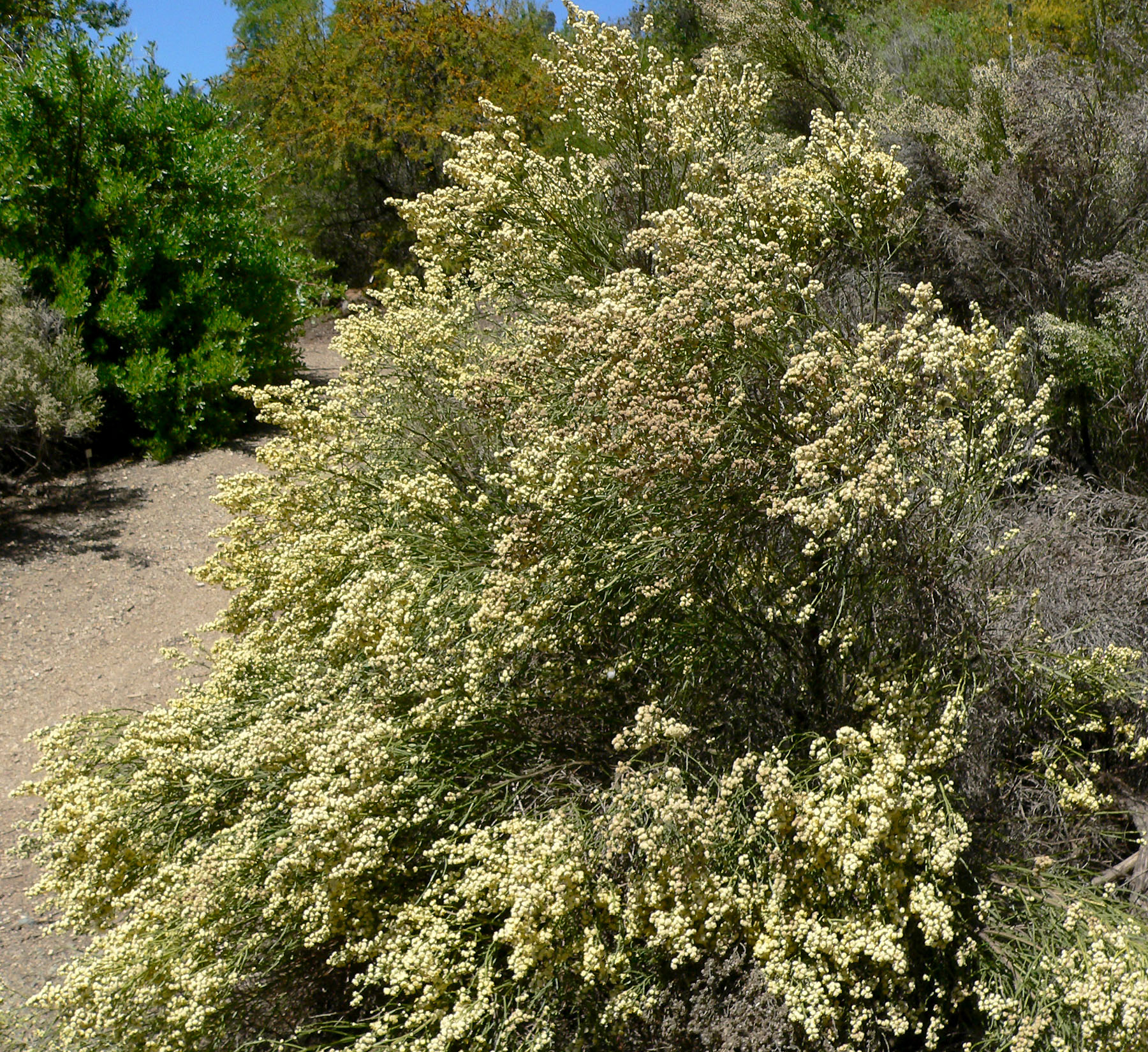
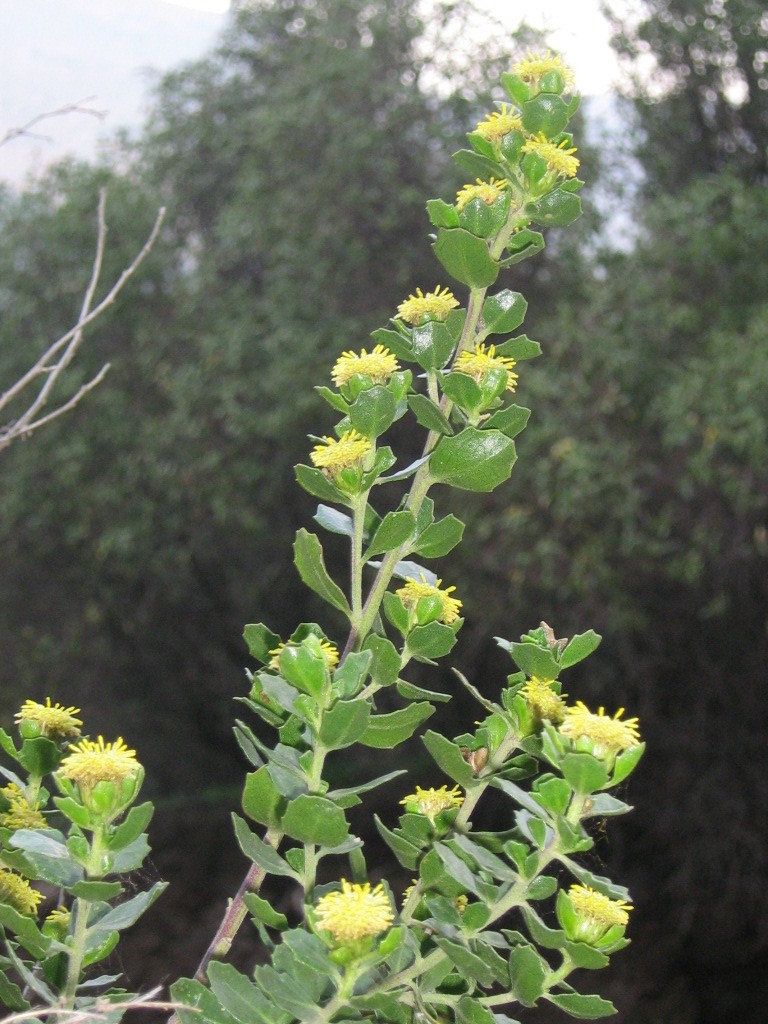
Baccharis is a genus of perennials and shrubs in the aster family (Asteraceae). They are commonly known as baccharises but sometimes referred to as "brooms", because many members have small thin leaves resembling the true brooms. They are not at all related to these however, but belong to an entirely different lineage of eudicots. B. halimifolia is commonly known as "groundsel bush", however true groundsels are found in the genus Senecio. Baccharis, with over 500 species, is one of the largest genera in the Asteraceae. It is found throughout the Americas, distributed mainly in the warmer regions of Brazil, Argentina, Colombia, Chile and Mexico, with B. halimifolia ranging northward along the Atlantic Coast to the southern tip of Nova Scotia in Canada. If present, the leaves of Baccharis are borne along the stems in alternate fashion. Flowers are usually white or pinkish. There are no ray flowers, but many disk flowers which are either staminate or pistillate. Some species of Baccharis are toxic to animals; in particular, consumption of B. coridifolia may lead to necrosis in the gastrointestinal tract of cattle, horses, sheep, and rabbits. The genus Baccharis is named after Bacchus (Dionysus), the Roman god of wine.
Read more on Wikipedia >