
Taigas
Enlarge text Shrink text-
 Topic
Topic

-
Save successfulThe item can be found in your Personal ZoneשגיאהLog in to your account to save

- Towards sustainable management of the boreal forest, 2003:p. 1 (boreal forests) pp. 2-4 (the circumboreal forest is the most extensive terrestrial biome in the world, encompassing some 14 million km² or 32% of the Earth's forest cover; the definition of "boreal forest" differs among various jurisdictions and with the purpose of any particular mapping and tabulation exercise. In general, we could call the boreal zone those arctic, subarctic, or northern mid-latitude regions that are dominated by a cold climate and able to support only a few coniferous and broadleaf tree genera) p. 5 (open woodlands that constitute the forest-tundra transition zone and much of the boreal climatic region, a zone classified as "taiga" in Canada) p. 6 (The "boreal zone" is generally considered to include the Taiga Cordillera, Boreal Cordillera, Taiga Plains, Boreal Plains, Taiga Shield, Boreal Shield, and Hudson Plains) pp. 320-322 ("The Canadian boreal forest biome has been subdivided into six broad ecozones based on geological features, climate, and forest cover. 'Boreal' ecozones are dominantly forested and contain a mix of spruce, pine, fir, and poplar-birch forest whereas the more northerly, colder 'Taiga' ecozones are dominated by open black spruce-lichen taiga and wetland and contain productive closed forest only in favourable locations such as on alluvial flats ... Open taiga has longer fire cycles and generally smaller fires than occur in closed boreal forest ... mid-boreal forest, south of the taiga")
- McGraw-Hill dict. of sci. and tech. terms, c2003(taiga [ECOL] A zone of forest vegetation encircling the Northern Hemisphere between the arctic-subarctic tundras in the north and the steppes, hardwood forests, and prairies in the south. Also known as boreal forest.)
- Henderson's dict. of biological terms, 2000(taiga: northern coniferous forest zone, esp. in Siberia, adjacent to tundra; boreal 1) appl. the northern coniferous forest growing in a band across the Northern Hemisphere, e.g. in North American and Siberia)
- Random House Web. unabr. dict., c1997(taiga: the coniferous evergreen forests of subarctic lands, covering vast areas of northern North America and Eurasia)
- The dict. of forestry, c1988(taiga: a subarctic, coniferous forest that is typically of open, slow-growing spruces, interspersed with bogs, and characteristic of Europe, Asia, and North America. Note: taiga forms a transition zone between the denser, boreal forests to the south and the tundra to the north and has a vegetation pattern that is closely related to the presence of permafrost and to fire history; boreal forest: the northern hemisphere, circumpolar, tundra forest type consisting primarily of black spruce and white spruce with balsam fir, birch, and aspen. Note: the boreal forest is the most extensive forest type in the world.)
- Dictionnaire de la foresterie, c2000(boreal forest: one of the three main forest zones in the world; it is located in the northern regions and is characterized by the predominance of conifers; taiga: refers to a coniferous boreal forest. Often, this term is used to refer to the vegetation zone of transition between boreal forest and tundra. This vegetal formation corresponds to a forest-tundra.)
- A dict. of ecology, 1998(boreal forest: the circumpolar, subarctic forest of high northern latitudes that is dominated by conifers. To the north it is bounded by tundra and to the south by temperate, broad-leaved, deciduous forest, steppe, or semi-desert; taiga: the name applied by many authorities to the whole of the boreal forest, but by some only to the more open, parklike tracts along the northern fringe of the boreal forest, otherwise known as lichen woodland)
- Thain, M. The Penguin dict. of biology, 2000(taiga: the northern coniferous forest or boreal forest that extends over vast areas of Russia, Scandinavia, and North America. Taiga is the Russian word for vegetation found in this biome)
- Blackwell's concise encyc. of ecology, 1999(taiga: a Russian term denoting a marshy, Siberian woodland and often used to denote the circumpolar boreal forest. However, it is also used to describe the ecotone zone between the boreal forest and the Arctic tundra; boreal forest: boreal forest, or taiga, is the world's largest vegetation formation, comprising coniferous forests that stretch around the Northern Hemisphere interrupted only by the North Atlantic Ocean and the Bering Strait. It forms a 1000-2000 km broad zone between treeless tundra in the north and either broad-leaved deciduous forests (in oceanic areas) or dry grasslands and semi-deserts (in continental areas) in the south)


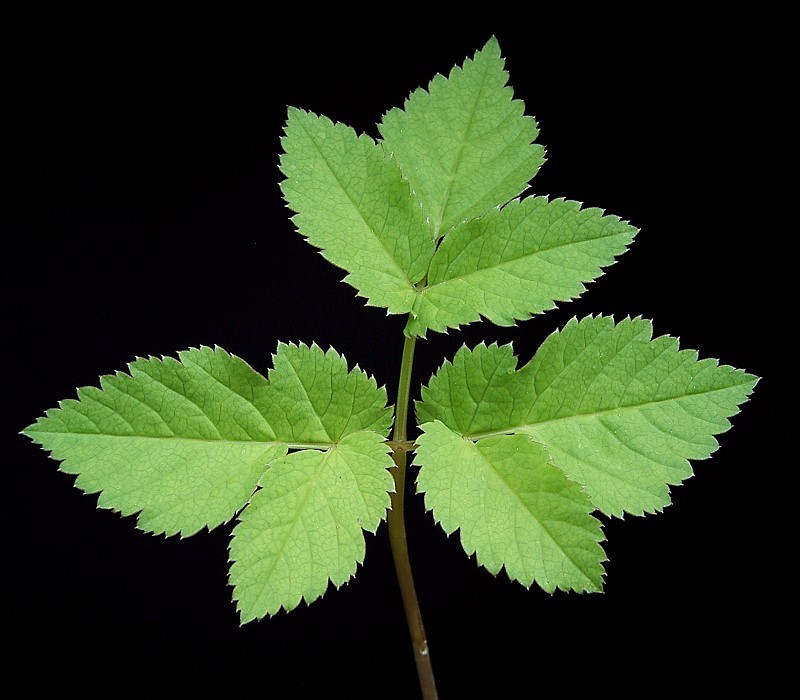


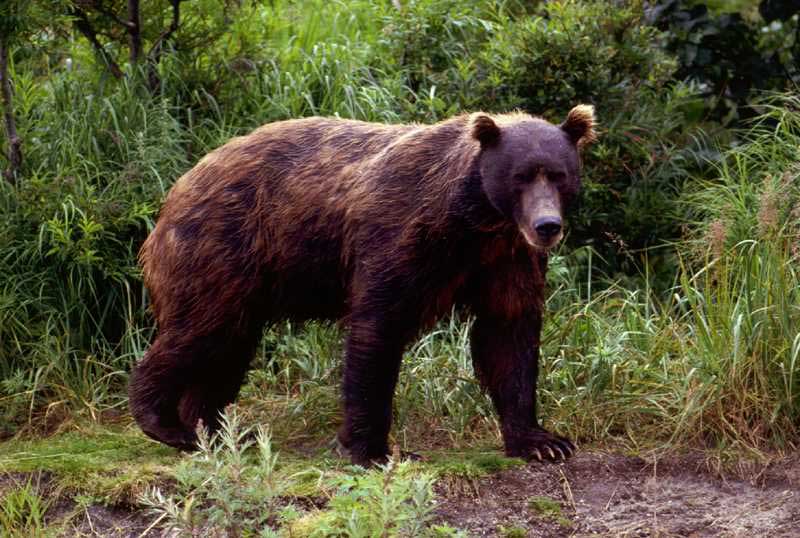


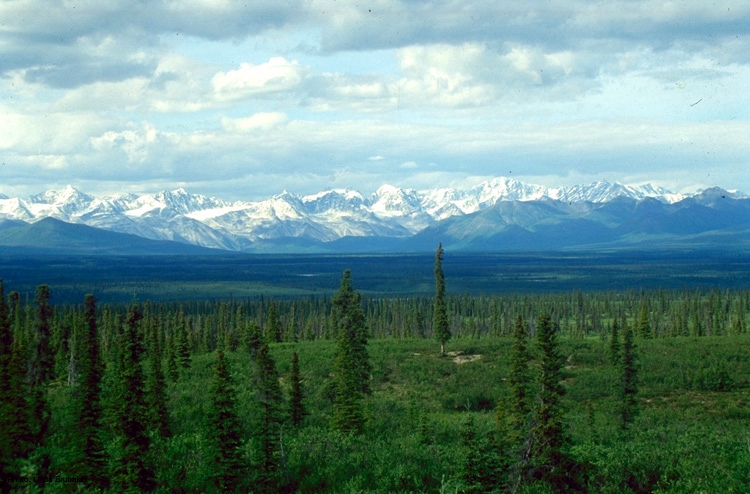

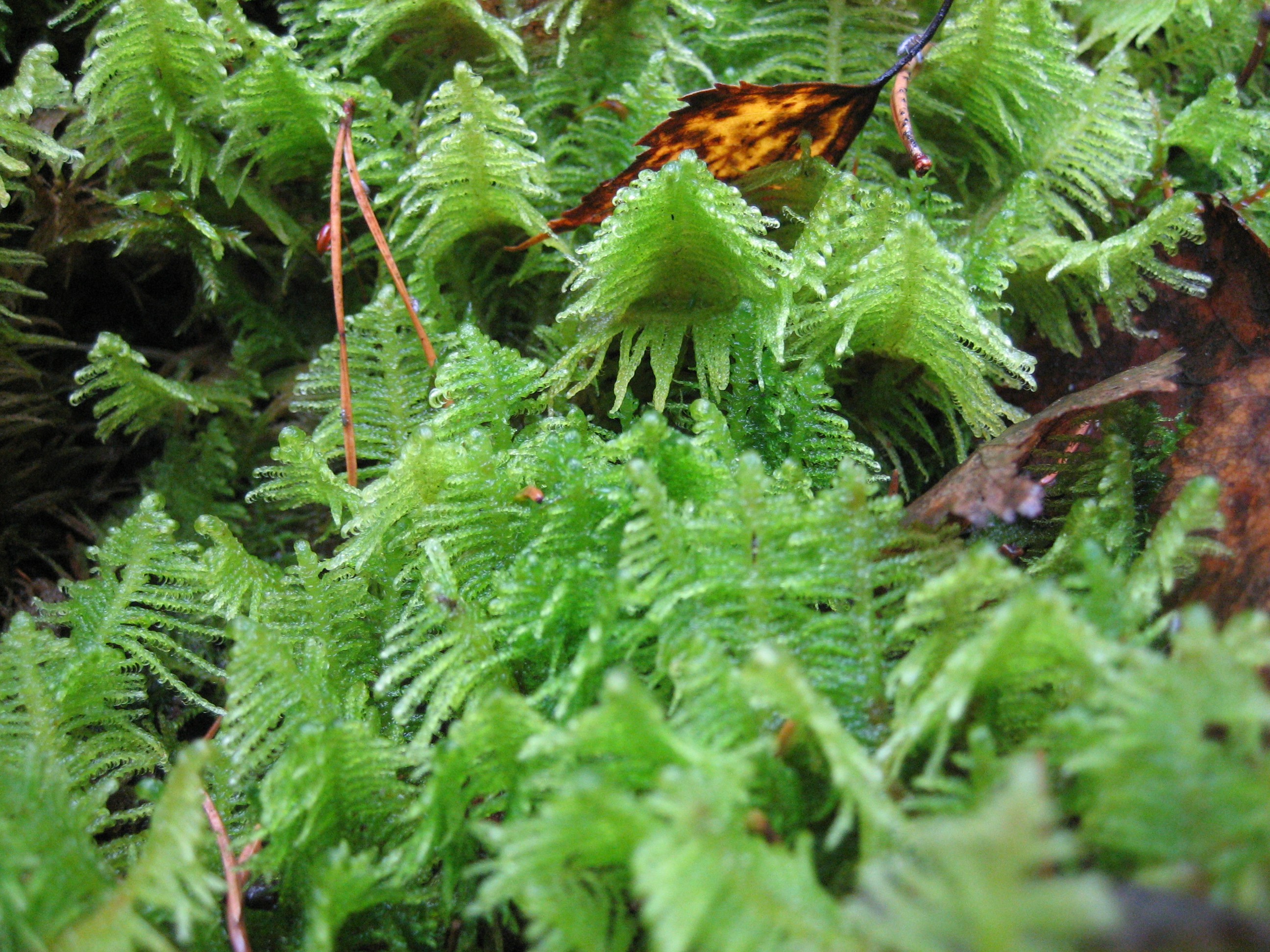

Beeblebrox (talk) 05:35, 18 December 2008 (UTC).
Beeblebrox, CC BY-SA 3.0


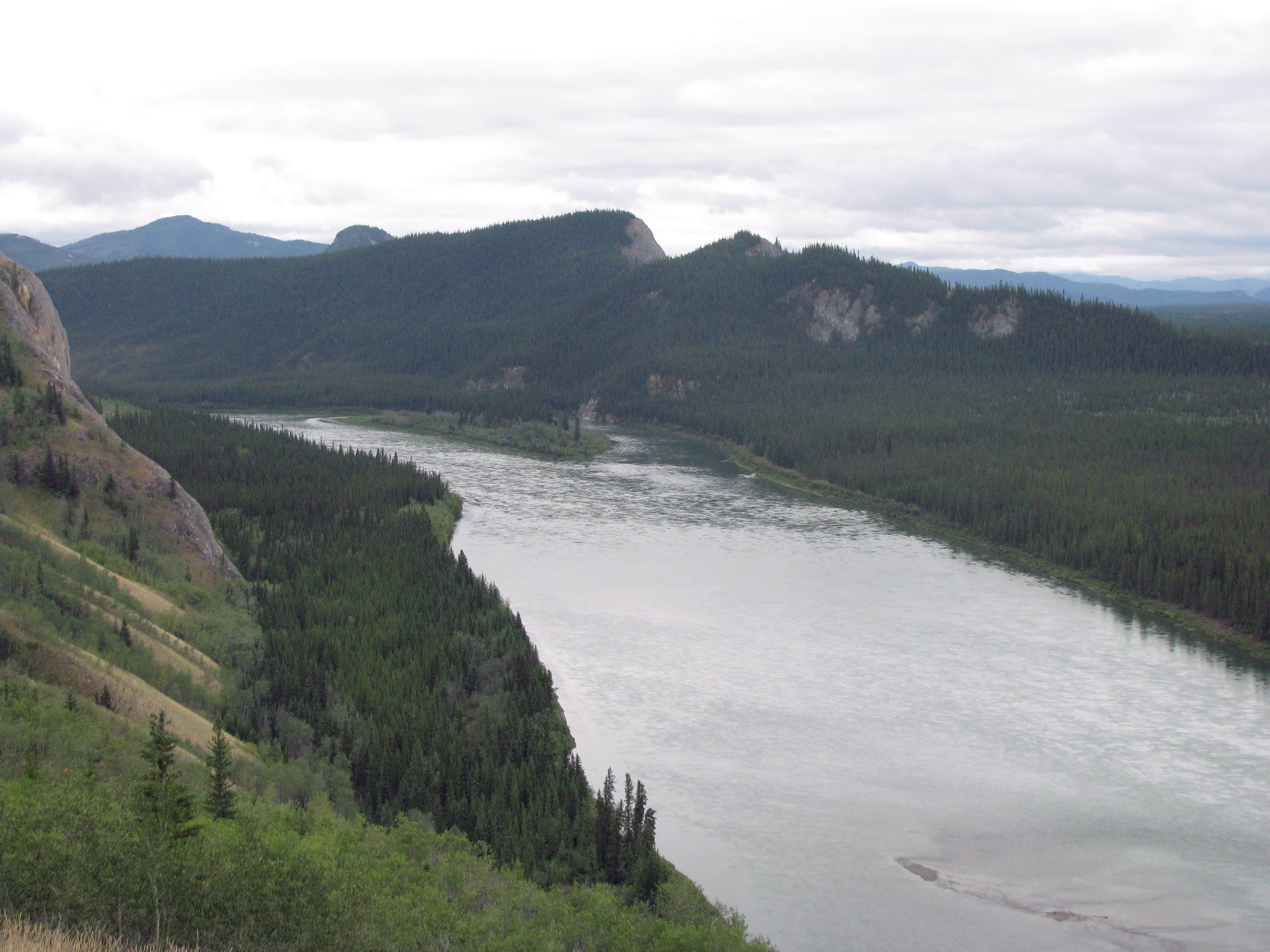


Taiga or tayga ( TY-gə; Russian: тайга́, IPA: [tɐjˈɡa]), also known as boreal forest or snow forest, is a biome characterized by coniferous forests consisting mostly of pines, spruces, and larches. The taiga, or boreal forest, is the world's largest land biome. In North America, it covers most of inland Canada, Alaska, and parts of the northern contiguous United States. In Eurasia, it covers most of Sweden, Finland, much of Russia from Karelia in the west to the Pacific Ocean (including much of Siberia), much of Norway and Estonia, some of the Scottish Highlands, some lowland/coastal areas of Iceland, and areas of northern Kazakhstan, northern Mongolia, and northern Japan (on the island of Hokkaido). The principal tree species, depending on the length of the growing season and summer temperatures, vary across the world. The taiga of North America is mostly spruce; Scandinavian and Finnish taiga consists of a mix of spruce, pines and birch; Russian taiga has spruces, pines and larches depending on the region; and the Eastern Siberian taiga is a vast larch forest. Taiga in its current form is a relatively recent phenomenon, having only existed for the last 12,000 years since the beginning of the Holocene epoch, covering land that had been mammoth steppe or under the Scandinavian Ice Sheet in Eurasia and under the Laurentide Ice Sheet in North America during the Late Pleistocene. Although at high elevations taiga grades into alpine tundra through Krummholz, it is not exclusively an alpine biome, and unlike subalpine forest, much of taiga is lowlands. The term "taiga" is not used consistently by all cultures. In the English language, "boreal forest" is used in the United States and Canada in referring to more southerly regions, while "taiga" is used to describe the more northern, barren areas approaching the tree line and the tundra. Hoffman (1958) discusses the origin of this differential use in North America and how this differentiation distorts established Russian usage. Climate change is a threat to taiga, and how the carbon dioxide absorbed or emitted should be treated by carbon accounting is controversial.
Read more on Wikipedia >