
IBM 704 (Computer)
Enlarge text Shrink text-
 Topic
Topic

-
Save successfulThe item can be found in your Personal ZoneשגיאהLog in to your account to save

- Work cat.: Coding for MIT-IBM 704 computer, c1958.
- Wikipedia, Apr. 9, 2009(The IBM 704, the first mass-produced computer with floating point arithmetic hardware, was introduced by IBM in Apr. 1954. The 704 was significantly improved over the IBM 701 in terms of architecture as well as implementation, and was not compatible with its predecessor.)
- Da Cruz, F. Columbia University computing history, via WWW, Apr. 9, 2009:timeline > 1950 > 1957 > Model 704 (The IBM 704; the IBM 704 Computer (1954). The first mass-produced computer with core memory and floating-point arithmetic)
- IBM Archives website, Apr. 9, 2009:Exhibits > IBM Mainframes > Mainframes reference room > Mainframes product profiles > 704 Data Processing System (The IBM 704 Data Processing System was a large-scale computer designed for engineering and scientific calculations. Its predecessor was the 701, and its sister computers were the 702 and 705 Data Processing Systems, designed primarily for commercial applications. All four types could be used for both scientific and commercial applications; Announced May 7, 1954 and withdrawn Apr. 7, 1960)

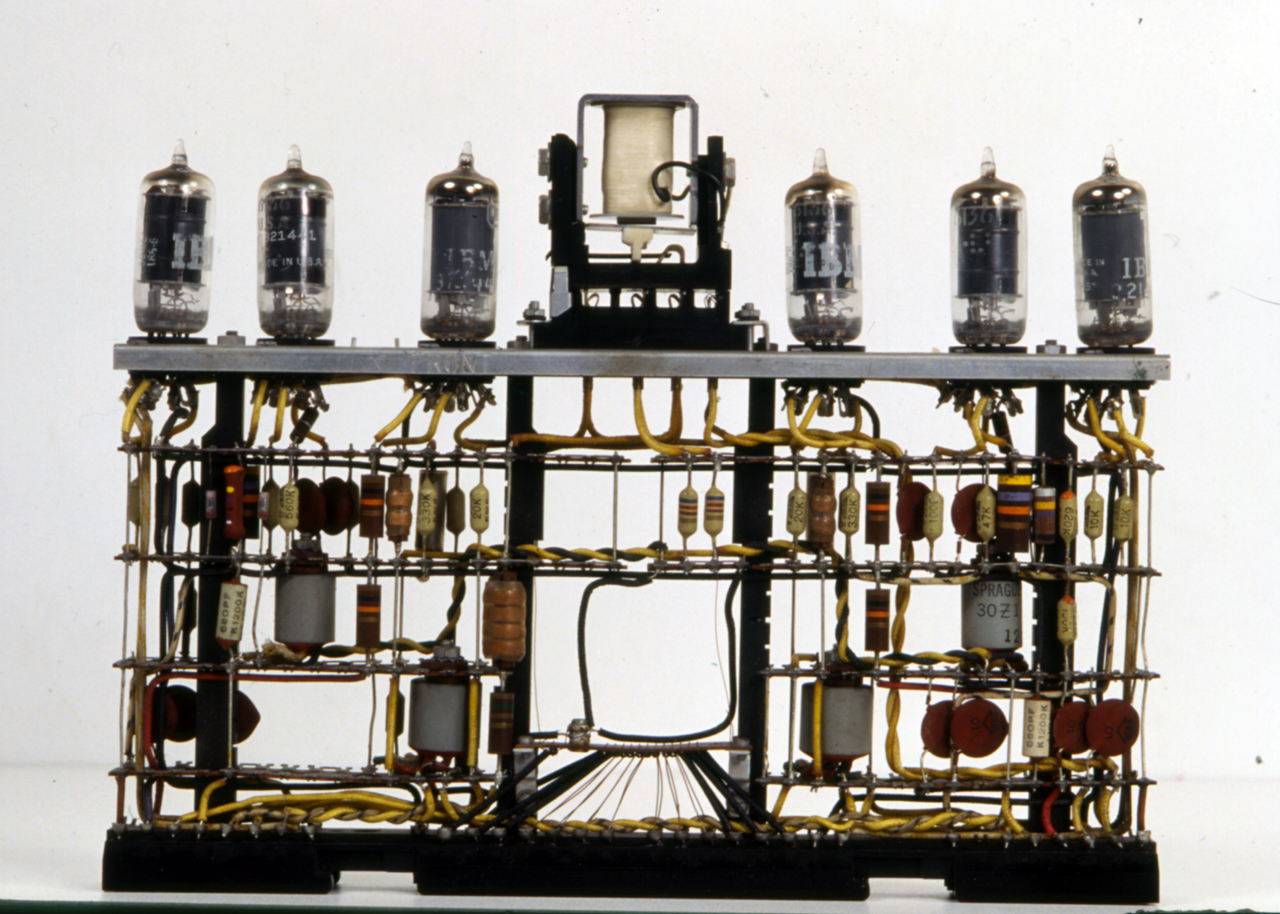
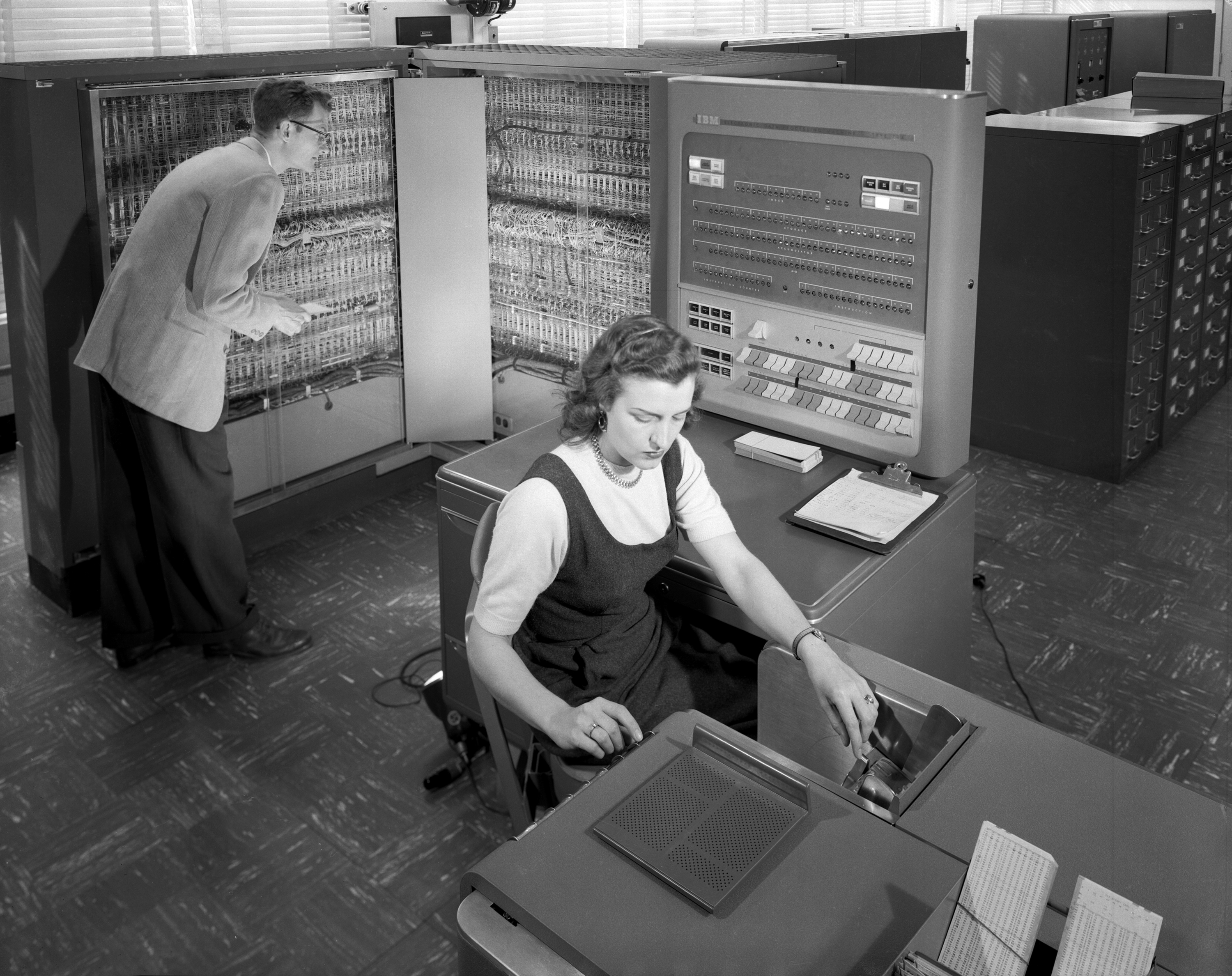
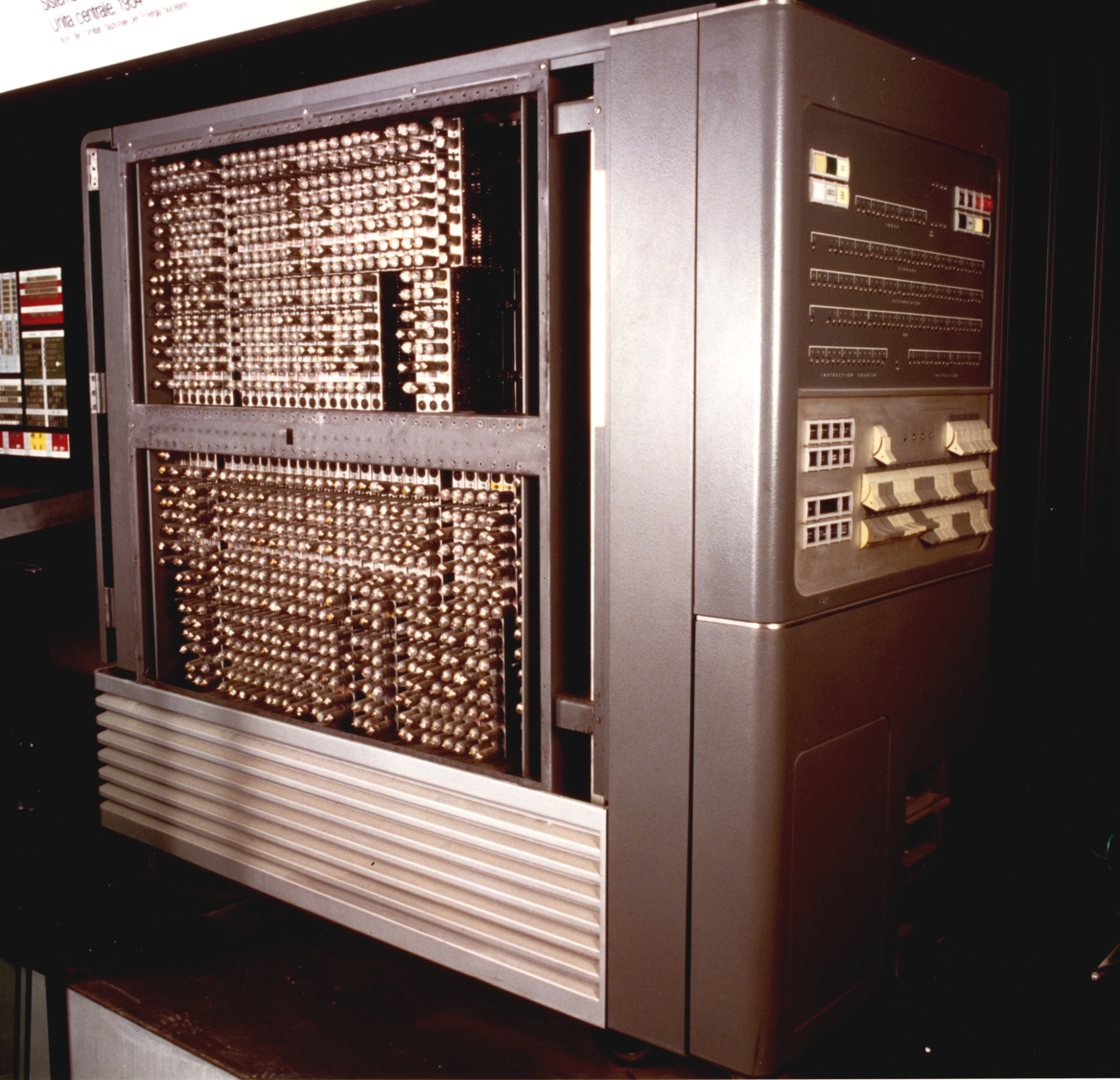
The IBM 704 is the model name of a large digital mainframe computer introduced by IBM in 1954. Designed by John Backus and Gene Amdahl, it was the first mass-produced computer with hardware for floating-point arithmetic. The IBM 704 Manual of operation states: The IBM 704 Electronic Data-Processing Machine is a large-scale, high-speed electronic calculator controlled by an internally stored program of the single address type. The 704 at that time was thus regarded as "pretty much the only computer that could handle complex math". The 704 was a significant improvement over the earlier IBM 701 in terms of architecture and implementation. Like the 701, the 704 used vacuum-tube logic circuitry, but increased the instruction size from 18 bits to 36 bits, the same as the memory's word size. Changes from the 701 include the use of magnetic-core memory instead of Williams tubes, floating-point arithmetic instructions, 15-bit addressing and the addition of three index registers. To support these new features, the instructions were expanded to use the full 36-bit word. The new instruction set, which is not compatible with the 701, became the base for the "scientific architecture" subclass of the IBM 700/7000 series computers. The 704 could execute up to 12,000 floating-point additions per second. IBM produced 123 type 704 systems between 1955 and 1960.
Read more on Wikipedia >