
Biomorphism (Art movement)
Enlarge text Shrink text-
 Topic
Topic
|
מספר מערכת
987007547354105171

-
Save successfulThe item can be found in your Personal ZoneשגיאהLog in to your account to save
Information for Authority record
Name (Latin)
Biomorphism (Art movement)
See Also From tracing topical name
Art, Modern 20th century
MARC

MARC
Other Identifiers
Wikidata:
Q864599
Library of congress:
sh2008002649
Sources of Information
- Work cat.: Maldonado, G. Le cercle e l'amibe : le biomorphisme dans l'art des années 1930, c2006.
- Art and Popular Culture WWW site, Mar. 28, 2008(Biomorphism was an art movement of the 20th century. The term was first used by Alfred H. Barr, Jr. in 1936. Biomorphist artists focused on the power of natural life and used organic shapes)
- Tate Online WWW site, Mar. 28, 2008:Glossary (In painting and sculpture biomorphic forms or images are ones that, while abstract, nevertheless refer to, or evoke, living forms such as plants and the human body. The term comes from combining the Greek words bios, meaning life, and morphe, meaning form. Biomorphic seems to have come into use around the 1930s)
1 / 4

Marina-Schreiber MS566
Gerardus, CC BY-SA 3.0

File:Benjamin G Bowden - Spacelander Bicycle.jpg
Brooklyn Museum, CC BY 3.0
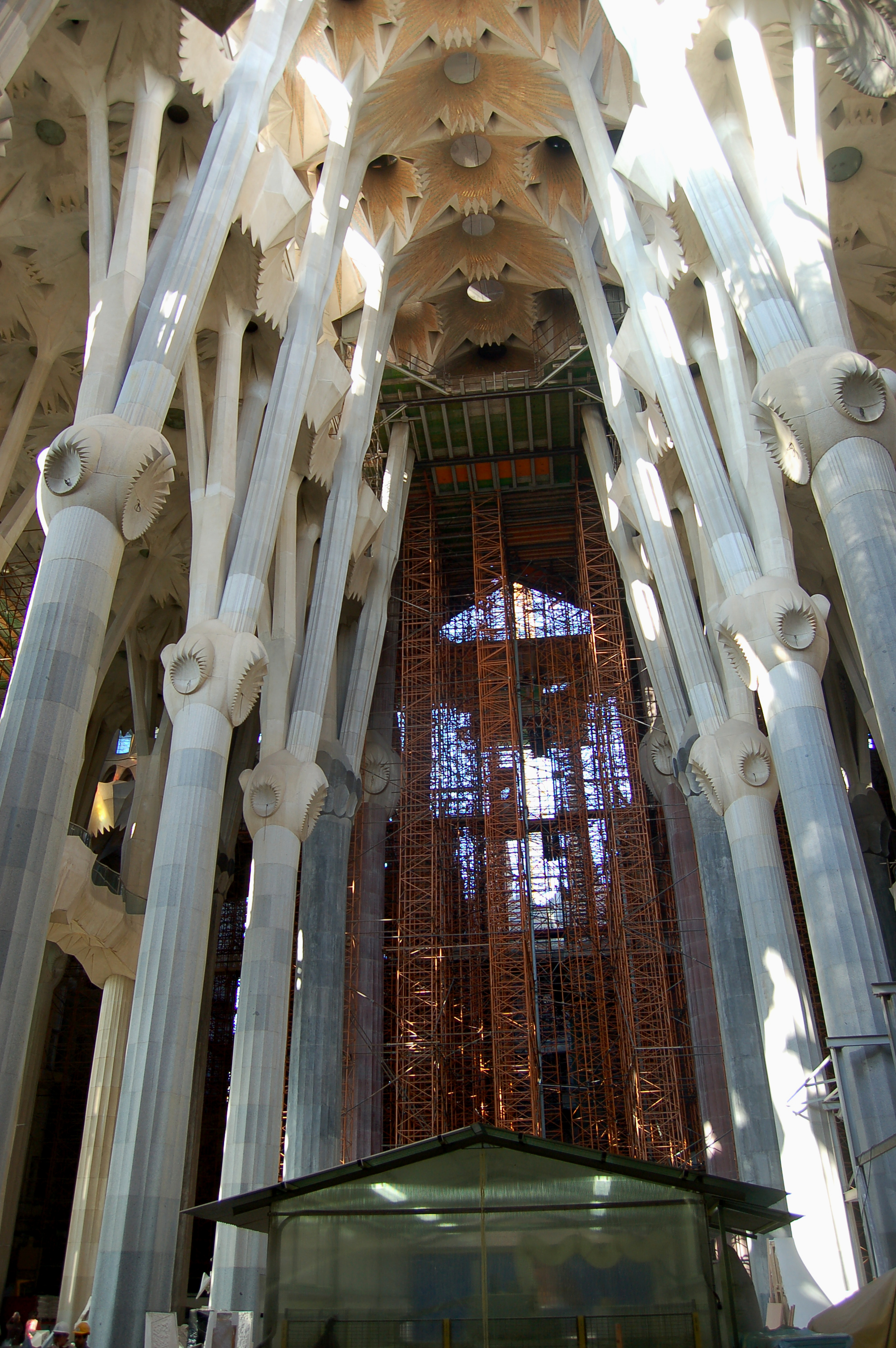
File:Sagrada Familia interior 1.jpg
, CC BY-SA 3.0

File:TWA Flight Center 2015.7.JPG
Fultonferryres, CC BY-SA 4.0
Wikipedia description:
Biomorphism models artistic design elements on naturally occurring patterns or shapes reminiscent of nature and living organisms. Taken to its extreme, it attempts to force naturally occurring shapes onto functional devices. In his search for architectural reform the French architecte Viollet le Duc is the first to express this idea clearly : Like a botanist, Viollet le Duc analyzes details of nature in his books, subsequently making them undergo metamorphoses.
Read more on Wikipedia >