
Richards, Ellen H. 1842-1911
Enlarge text Shrink text-
 Personality

-
Save successfulThe item can be found in your Personal ZoneשגיאהLog in to your account to save

- nuc86-18885: Her The relation of college women ... [MI] 1890(hdg. on MH rept.: Richards, Ellen Henrietta (Swallow), 1842-1911; usage: Mrs. Ellen H. Richards)
- Clarke, R. Ellen Swallow, 1973:t.p. (Ellen Swallow)
- National Women's Hall of Fame WWW Site, 10 May 2007(Ellen Swallow Richards (1842 - 1911))
.jpg)


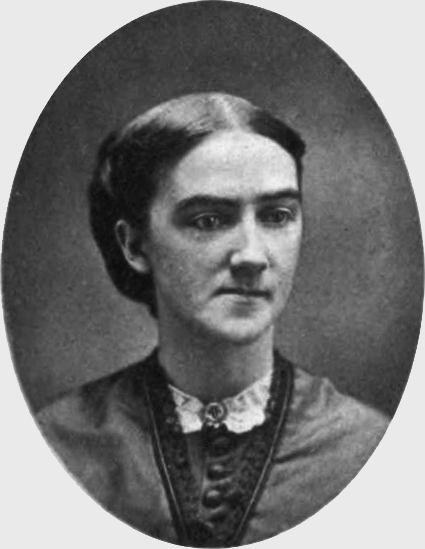


Ellen Henrietta Swallow Richards (née Swallow; December 3, 1842 – March 30, 1911) was an American industrial and safety engineer, environmental chemist, and university faculty member in the United States during the 19th century. Her pioneering work in sanitary engineering, and experimental research in domestic science, laid a foundation for the new science of home economics. She was the founder of the home economics movement characterized by the application of science to the home, and the first to apply chemistry to the study of nutrition. Richards graduated from Westford Academy (second oldest secondary school in Massachusetts) in 1862. She was the first woman admitted to the Massachusetts Institute of Technology. She graduated in 1873 and later became its first female instructor. Richards was the first woman in America accepted to any school of science and technology, and the first American woman to obtain a degree in chemistry, which she earned from Vassar College in 1870. Richards was a pragmatic feminist, as well as a founding ecofeminist, who believed that women's work within the home was a vital aspect of the economy. She made strides forward in the area of women's education, specifically in developing laboratory skills. At the same time, she did not directly challenge women's place and work in the home, instead emphasizing the need for their involvement in domestic sciences. Through her work she created multiple organizations and published many articles, writing over 100 publications during her lifetime.
Read more on Wikipedia >