
Romer, Paul Michael, 1955-
Enlarge text Shrink text-
 Personality

-
Save successfulThe item can be found in your Personal ZoneשגיאהLog in to your account to save

- Barro, R. J. Ski-lift pricing, 1986:t.p. (Paul M. Romer) abstract (Dept. of Econ., Univ. of Rochester)
- LC data base, 4-27-87(MLC hdg.: Romer, Paul Michael, 1955-)
- Thinking and feeling, 2000:t.p. (Paul Romer, Grad. School of Business, Stanford Univ.)
.jpg)

.jpg#P170) , CC BY 2.0
, CC BY 2.0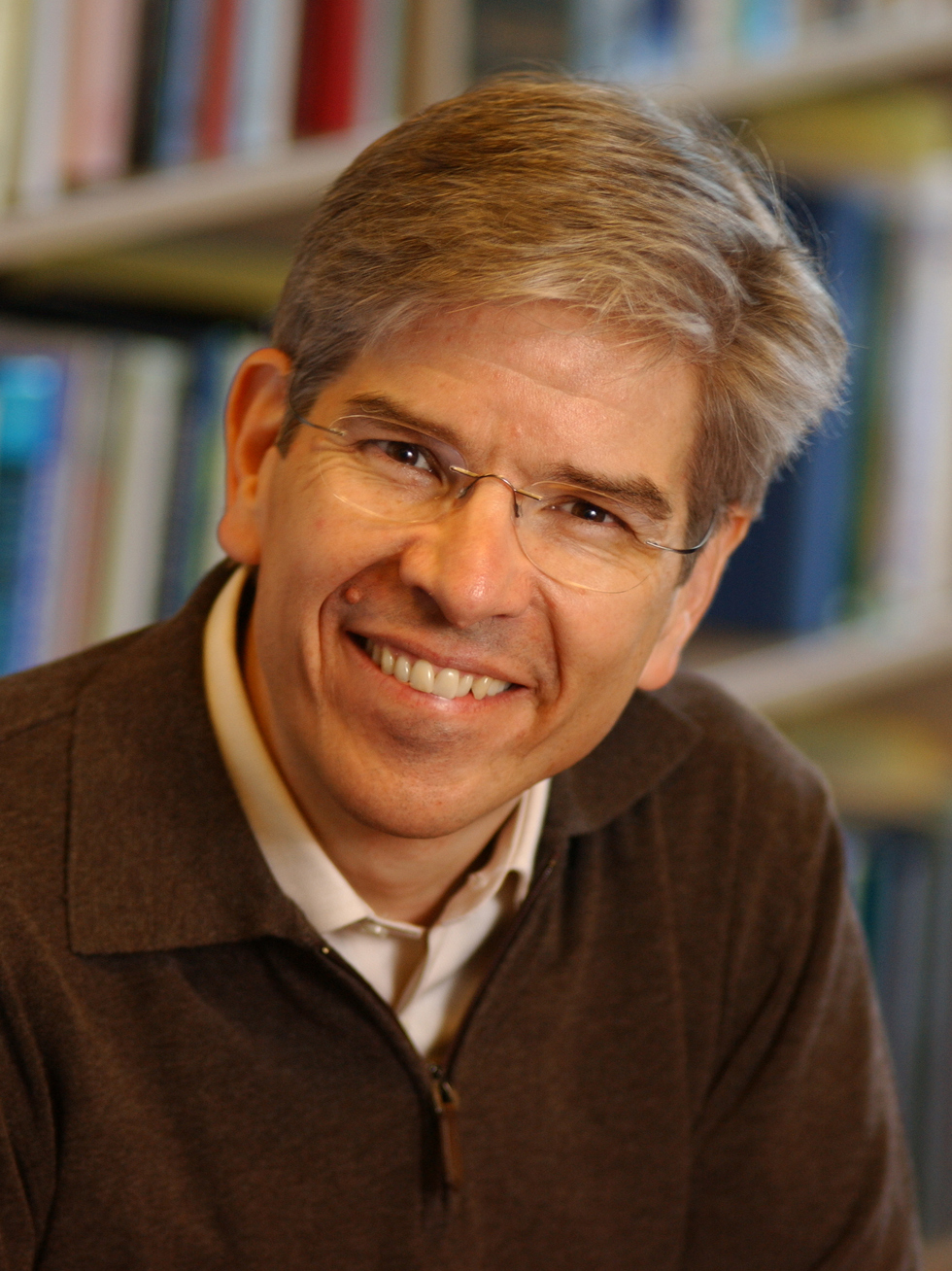
Paul Michael Romer (born November 7, 1955) is an American economist and policy entrepreneur who is a Seidner University Professor in Finance at Boston College. Romer is best known as the former Chief Economist of the World Bank and for co-receiving the 2018 Nobel Memorial Prize in Economic Sciences (shared with William Nordhaus) for his work in endogenous growth theory. He also coined the term "mathiness," which he describes as misuse of mathematics in economic research. Before joining Boston College, Romer was a professor at New York University, the University of Chicago, the University of California, Berkeley, Stanford University's Graduate School of Business, and the University of Rochester. Romer was chief economist and senior vice president of the World Bank until he resigned in January 2018 following a controversy arising from his claim of possible political manipulation of Chile's "ease of doing business" ranking. Romer took leave from his position as professor of economics at NYU when he joined the World Bank, and returned to NYU after his term. In addition, he has also been a researcher at the National Bureau of Economic Research, Stanford's Center for International Development, the Stanford Institute for Economic Policy Research, the Hoover Institution, as well as a fellow at the American Academy of Arts and Sciences and the Center for Global Development.
Read more on Wikipedia >