
Kitazato, Shibasaburō, 1853-1931
Enlarge text Shrink text-
 Personality
|
מספר מערכת
987007422557005171

-
Save successfulThe item can be found in your Personal ZoneשגיאהLog in to your account to save
Information for Authority record
Name (Hebrew)
שיבסבורו, קיטסאטו, 1853-1931
Name (Latin)
Kitazato, Shibasaburō, 1853-1931
Other forms of name
Kitasato, S. (Shibasaburō), 1853-1931
Kitasato, Shibasaburō, 1853-1931
北里柴三郎, 1853-1931
Date of birth
1853-01-29
Date of death
1931-06-13
Gender
male
MARC

MARC
Sources of Information
- LCCN 40-3749: Miyajima, M. Teacher and pupil, 1935(hdg.: Kitasato, Shibasaburō, 1853-1931; variant: S. Kitasato)
- LC data base, 9-27-84(hdg.: Kitasato, Shibasaburō, 1853-1931; usage: Shibasaburo Kitasato)
- Nagaki, D. Kitazato Shibasaburō to sono ichimon, 1989:p. 59, etc. (b. 12/20/Kanʼei 5 (1852 [i.e. 1853]); d. 6/13/1931)
- Konsaisu jinmei j.(Kitazato Shibasaburō; b. 1852; d. 1931; bacteriologist)
- Jinbutsu refarensu j.(Kitazato Shibasaburō; b. 1852; d. 1931)
- WW in Japan, 1916(Kitazato Shibasaburō; b. 12/20/1852; bacteriologist)
- Dai Nihon hyakka j.(Kitazato Shibasaburō; b. 1852; d. 1931; M.D.)
1 / 3

Kitasato Shibasaburo
Unknown author, Public domain
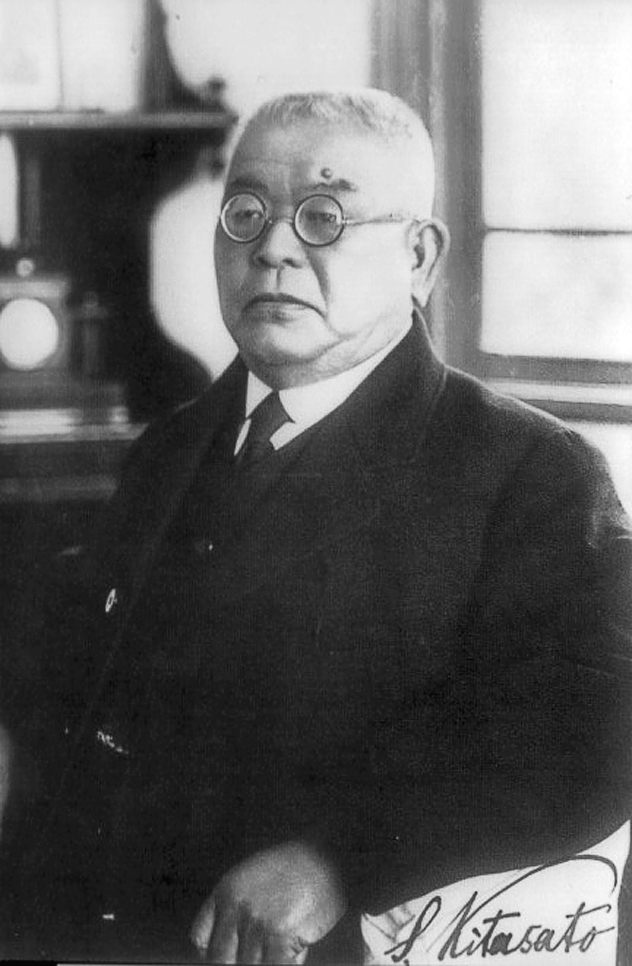
File:Kitasato Shibasaburo.jpg
Unknown author, Public domain

File:Kitasato University new Hospital.JPG
Hanabishi, CC BY-SA 3.0
Wikipedia description:
Baron Kitasato Shibasaburō (北里 柴三郎; January 29 [O.S. 17 January], 1853 – June 13, 1931) was a Japanese physician and bacteriologist. He is remembered as the co-discoverer of the infectious agent of bubonic plague in Hong Kong during an outbreak in 1894, almost simultaneously with Alexandre Yersin. Kitasato was nominated for the first annual Nobel Prize in Physiology or Medicine in 1901. Kitasato and Emil von Behring, working together in Berlin in 1890, announced the discovery of diphtheria antitoxin serum. Von Behring was awarded the 1901 Nobel Prize because of this work, but Kitasato was not.
Read more on Wikipedia >