
Argentina. Corte Suprema de Justicia de la Nación
Enlarge text Shrink text-
 Governmenal body

-
Save successfulThe item can be found in your Personal ZoneשגיאהLog in to your account to save

- Goldschmidt, W. Divorcio extranjero ... 1981:t.p. (Corte Suprema de Justicia de la Nación)
- Universidad Nacional del Litoral. Instituto de Der. Internacional Dr. Mario Antelo. El derecho internacional ... 1958:t.p. (Corte Suprema de la Nación)
- Guía Interaction, 1968(Corte Suprema de Justicia de la Nación)
- Guiapa, 1971(Corte Suprema de Justicia de la Nación)
- Groisman, E.I. La Corte Suprema de Justicia durante la dictadura, 1976-1983, 1987:t.p. (Corte Suprema de Justicia) p. 7 (Corte Suprema de Justicia de la Nación)



- Ricardo_Lorenzetti_Vilma_Socorro_Martínez.jpg: Embajada de EEUU, Buenos Aires
- derivative work: Athenchen (talk)


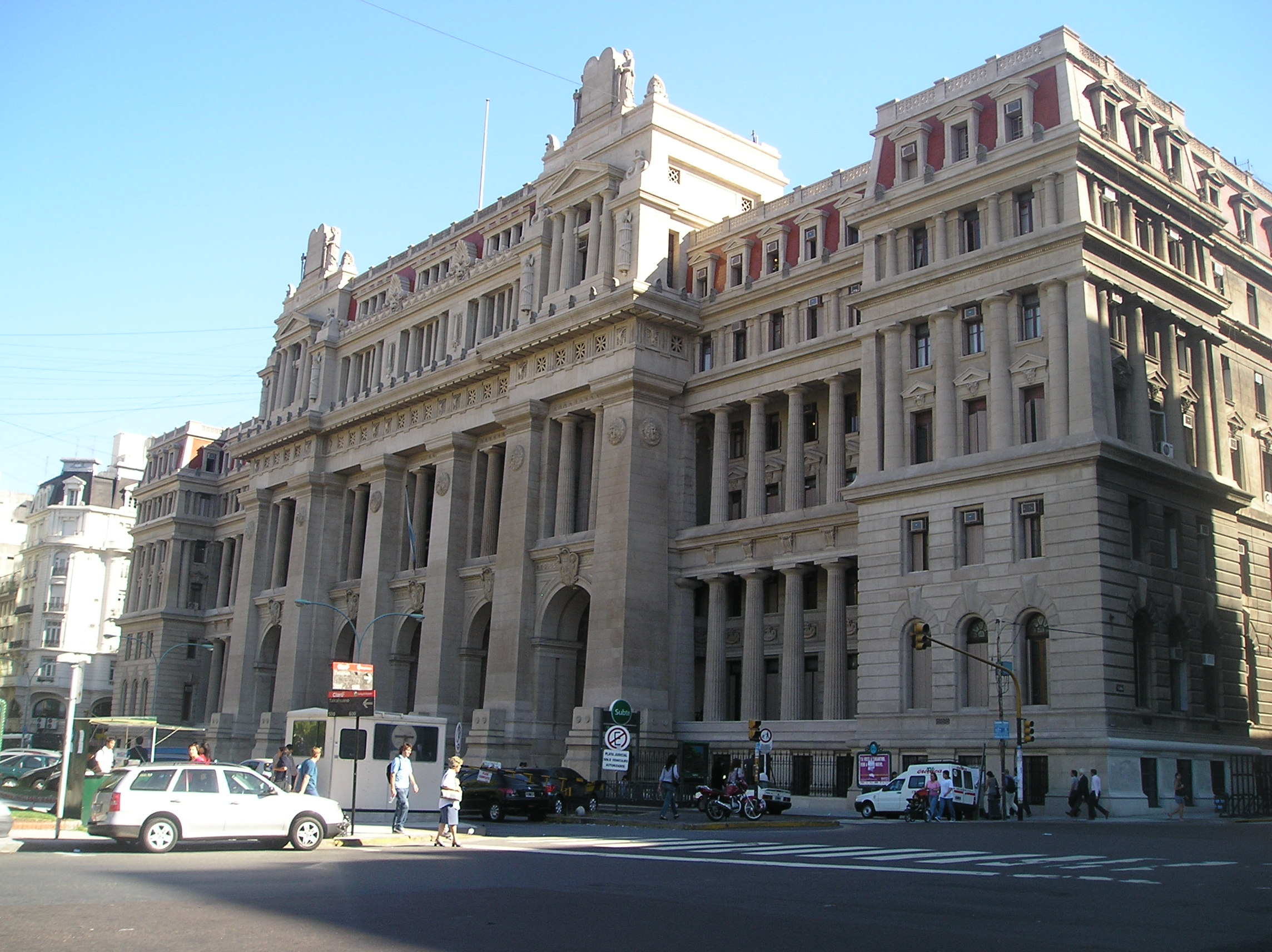
The Supreme Court of Argentina (Spanish: Corte Suprema de Argentina), officially the Supreme Court of Justice of the Nation (Spanish: Corte Suprema de Justicia de la Nación, CSJN), is the highest court of law of the Argentine Nation. It was inaugurated on 15 January 1863. During much of the 20th century, it and the Argentine judicial system in general lacked autonomy from the executive power. It was reformed in 2003 by the decree 222/03. The Supreme Court functions as a last resort tribunal. Its rulings cannot be appealed. It also decides on cases dealing with the interpretation of the constitution (for example, it can overturn a law passed by Congress if deems it unconstitutional). The members of the Supreme Court are appointed by the President with the agreement of at least two-thirds of the present Senate members in a session convened for that purpose, and can only be removed by an impeachment process called juicio político ("political trial"), initiated by the Chamber of Deputies and carried out by the Senate, exclusively on grounds of improper behaviour.
Read more on Wikipedia >