
Vygotskiĭ, L. S. 1896-1934
Enlarge text Shrink text-
 Personality

-
Save successfulThe item can be found in your Personal ZoneשגיאהLog in to your account to save

- الخيال والإبداع في مرحلة الطفولة، 2017:صفحة العنوان (ليف سيمينوفتش فيجوتسكي)
- Varshava, B. E. Psikhologicheskiĭ slovarʹ, 1931.
- Wertsch, J.V. Vygotsky and the social formation of mind, 1985:CIP galley (Lev Semenovich Vygotsky)
- Rissom, I. Der Begriff des Zeichens in den Arbeiten Lev Semenovic Vygotskijs, 1985:t.p. (Lev Semenovic Vygotskijs)
- His Voobrazhenie i tvorchestvo v detskom vozraste [MI] 1930:added t.p. (L. Wigotsky)
- Actualidad de Lev S. Vigotski, 1987:t.p. (Lev S. Vigotski) p. 7 (L.S. Vigotski)
- Vygotskiĭ, L. S. I shu hsin li hsueh, 1985:t.p. (Lieh Hsieh Wei-ko-tzʻu-chi)
- Koczanowicz, L. Analizy ludzkiego działania, 1990:t.p. (L.S. Wygotskiego)
- Avec Vygotski, c1999:p. 81 (Lev Sémionovitch Vygotski)
- ספר: למידה בהקשר חברתי, 2004.
- LCN

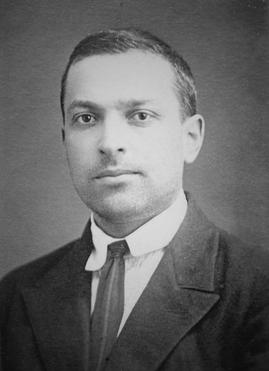
Lev Semyonovich Vygotsky (Russian: Лев Семёнович Выготский, IPA: [vɨˈɡotskʲɪj]; Belarusian: Леў Сямёнавіч Выгоцкі; November 17 [O.S. November 5] 1896 – June 11, 1934) was a Russian and Soviet psychologist, best known for his work on psychological development in children and creating the framework known as cultural-historical activity theory. After his early death, his books and research were banned in the Soviet Union until Joseph Stalin's death in 1953, with a first collection of major texts published in 1956. His major ideas include: The social origin of mind: Vygotsky believed that human mental and cognitive abilities are not biologically determined, but instead created and shaped by use of language and tools in the process of interacting and constructing the cultural and social environment. The importance of mediation: He saw mediation as the key to human development, because it leads to the use of cultural tools and becomes a pathway for psychological development through the process of interiorization. The zone of proximal development: Vygotsky introduced the concept, which refers to the gap between a child's current level of development and the level they are capable of reaching with tools provided by others with more knowledge. The significance of play: Vygotsky viewed play as a crucial aspect of children's development, as he thought of it as the best sandbox to build and develop the practice of mediation.
Read more on Wikipedia >