
Zāyid ibn Sulṭān Āl Nahayyān, 1918-2004
Enlarge text Shrink text-
 Personality

-
Save successfulThe item can be found in your Personal ZoneשגיאהLog in to your account to save

- The Author's أصول الريادة الحضارية, 1995.
- Author's Khiṭāb Ṣāḥib al-Sumūw al-Shaykh Zāyid, 1974?
- Tammām, Ḥ. Zayed bin Sultan Al-Nahayyan, 1981 (subj.)t.p. (Zayed bin Sultan Al-Nahayyan)
- His Gouverner, 1988:t.p. (Zayed Ben Sultan Al-Nahyan)
- Hopes and deeds, 1990:p. 9 (Zayed Bin Sultan Al Nahyan)
- Wikipedia WWW site, June 8, 2005(Sheikh Zayed bin Sultan Al Nahyan; b. 1918; d. Nov. 2, 2004; principal architect of the seven United Arab Emirates; ruler of Abu Dhabi; president of the UAE, 1971-2004)
- זאיד, 2022:דש פנימי (השייח' זאיד בן סולטאן אאל נהיאן, שליט האמירות של אבו דאבי והנשיא הראשון של איחוד האמירויות הערביות)
.jpg)
- derivative work: Sashi Suseshi

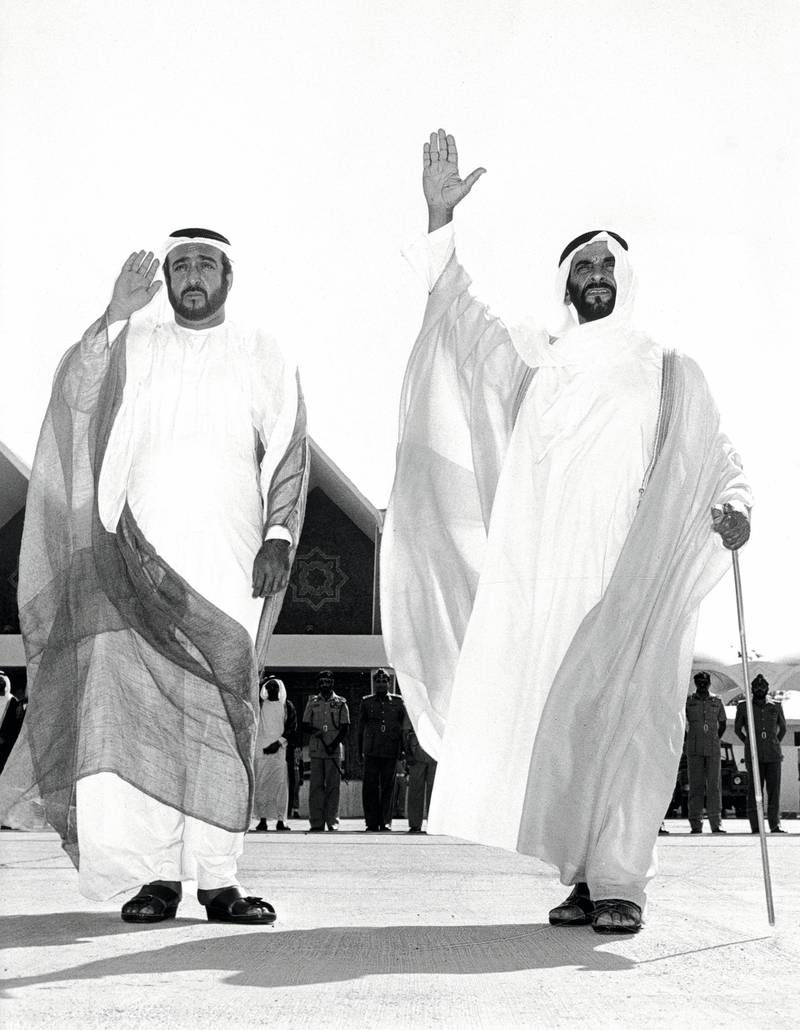


Sheikh Zayed bin Sultan Al Nahyan (Arabic: زايد بن سلطان آل نهيان, romanized: Zāyid bin Sulṭān Āl Nahyān; 6 May 1918 – 2 November 2004) was an Emirati politician, philanthropist, and the founding father of the United Arab Emirates. Zayed served as the governor of Eastern Region from 1946 until he became the ruler of Abu Dhabi in 1966, and served as the first president of the United Arab Emirates from its independence on 2 December 1971 until his death in 2004. He is referred in the United Arab Emirates as the Father of the Nation for being the principal driving force behind the unification of the United Arab Emirates. Zayed replaced his older brother Sheikh Shakhbut bin Sultan as the ruler of Abu Dhabi on 6 August 1966 after Shakhbut was deposed through a bloodless coup by members of the ruling family with British support.
Read more on Wikipedia >