
Busts
Enlarge text Shrink text-
 Topic
Topic

-
Save successfulThe item can be found in your Personal ZoneשגיאהLog in to your account to save


Bust of Be sheekee, or Buffalo Beshekee also Pezeke and other variant spellings of Ojibwe: Bizhiki (English: Buffalo) was a noted war chief from the Bear doodem of the Pillager Chippewa Band during the 19th century in North America.
As a young man, he signed the 1837 Treaty of St. Peters as Pe-zhe-kins (Bizhikiins, meaning "Young Buffalo"), a Warrior. The Pillager Band was famous for producing skilled fighters in the wars against the Dakota, and in his time, Beshekee was among the most respected of these.
In 1855, he travelled with Aysh-ke-bah-ke-ko-zhay (Flat Mouth), another prominent Pillager leader to Washington D.C. to address the grievances of the Mississippi Chippewa and to negotiate a cession of Ojibwe lands at the headwaters of the Mississippi River to the U.S. Government.
Beshekee would later sign the 1863 Treaty that partially addressed these grievances by establishing permanent reservations in Minnesota, including one at Leech Lake.

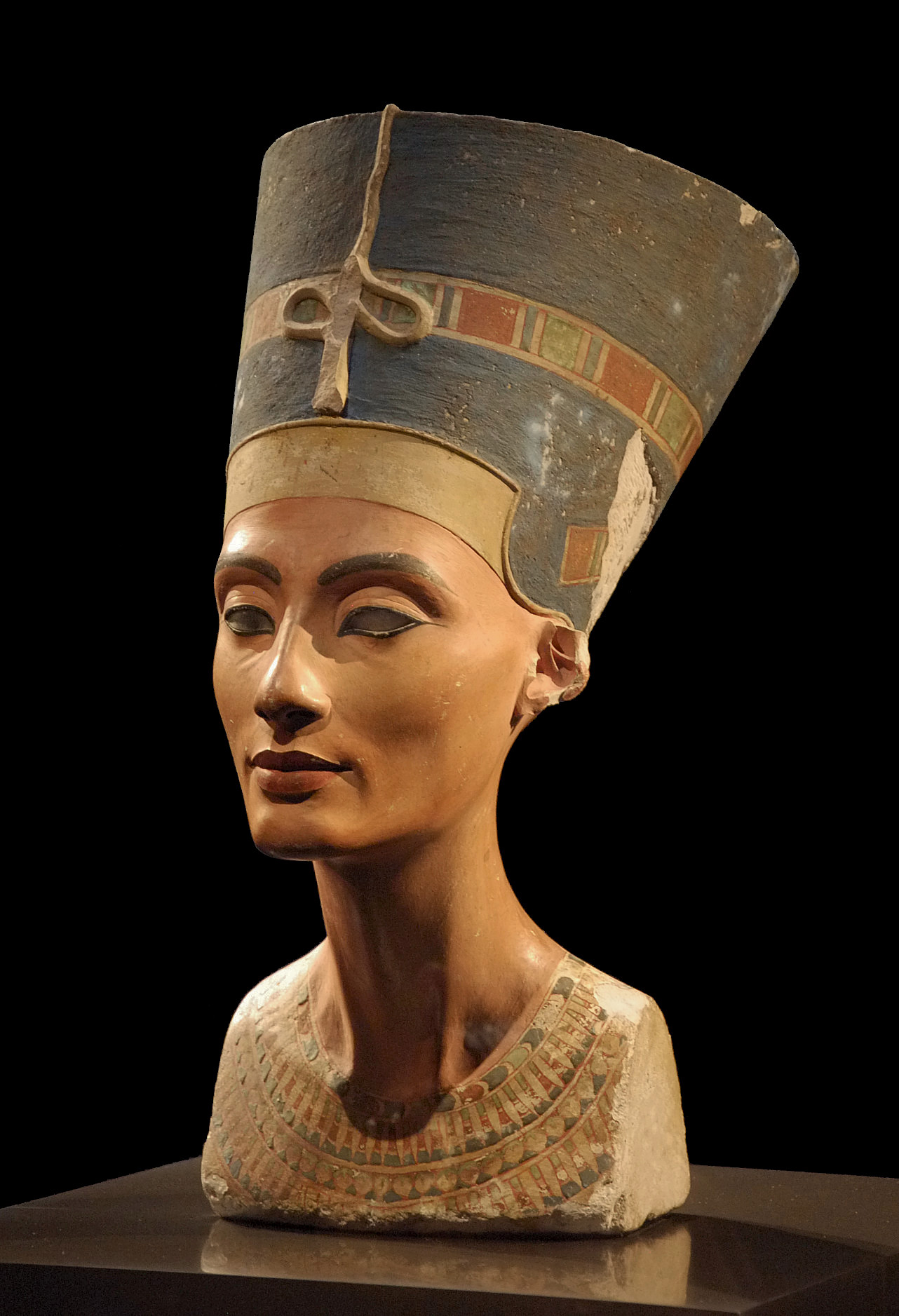

A bust is a sculpted or cast representation of the upper part of the human body, depicting a person's head and neck, and a variable portion of the chest and shoulders. The piece is normally supported by a plinth. The bust is generally a portrait intended to record the appearance of an individual, but may sometimes represent a type. They may be of any medium used for sculpture, such as marble, bronze, terracotta, plaster, wax or wood. As a format that allows the most distinctive characteristics of an individual to be depicted with much less work, and therefore expense, and occupying far less space than a full-length statue, the bust has been since ancient times a popular style of life-size portrait sculpture. A sculpture that only includes the head, perhaps with the neck, is more strictly called a "head", but this distinction is not always observed. Display often involves an integral or separate display stand. The Adiyogi Shiva statue located in India representative of Hindu God Shiva is the world's largest bust sculpture and is 112 feet (34 m) tall.
Read more on Wikipedia >