
Premacanda, 1881-1936
Enlarge text Shrink text-
 Personality

-
Save successfulThe item can be found in your Personal ZoneשגיאהLog in to your account to save

- The Author's Поле битвы, [1958].
- Premchand, 1944.
- Premcand (1880-1936), 1980:t.p. (Premcand)
- Premacandottara teraha Hindī upanyāsa, 1999.
- Premacanda kī sarvaśreshṭha kahāniyāṃ, 2003:t.p. (Munśī Premacanda)
- Afsānah nigār Paremcand, 2006:(Paremcand) t.p. verso (Parem Chand)
- Sēvā satan̲am, 2006:t.p. (Mun̲ṣi Pirēmcant; Pirēmcant)
- Gaʼūdān, 2010:t.p. ('منشى پريمچند = Munshī Premcand) t.p. verso (Pakistani CIP data: Prem Chand, Munshi)
- Prem Cand ke t̤anziyah afsāne, 2011:t.p. (Prem Cand = پريم چند)

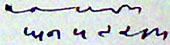
, Public domain


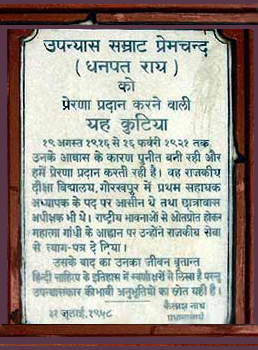
Dhanpat Rai Srivastava (31 July 1880 – 8 October 1936), better known as Munshi Premchand based on his pen name Premchand (pronounced [preːm t͡ʃənd̪] ), was an Indian writer famous for his modern Hindustani literature. Premchand was a pioneer of Hindi and Urdu social fiction. He was one of the first authors to write about caste hierarchies and the plight of women and labourers of the late 1880s. He is one of the most celebrated writers of the Indian subcontinent, and is regarded as one of the foremost Hindi writers of the early twentieth century. His works include Godaan, Karmabhoomi, Gaban, Mansarovar, and Idgah. He published his first collection of five short stories in 1907 in a book called Soz-e-Watan (Sorrow of the Nation). His works include more than a dozen novels, around 300 short stories, several essays and translations of a number of Indian and foreign literary works into Hindi.
Read more on Wikipedia >