
Mumming plays
Enlarge text Shrink text-
 Topic
Topic

-
Save successfulThe item can be found in your Personal ZoneשגיאהLog in to your account to save


Taken by: Adam Keppel-Garner
, CC-BY-SA-3.0

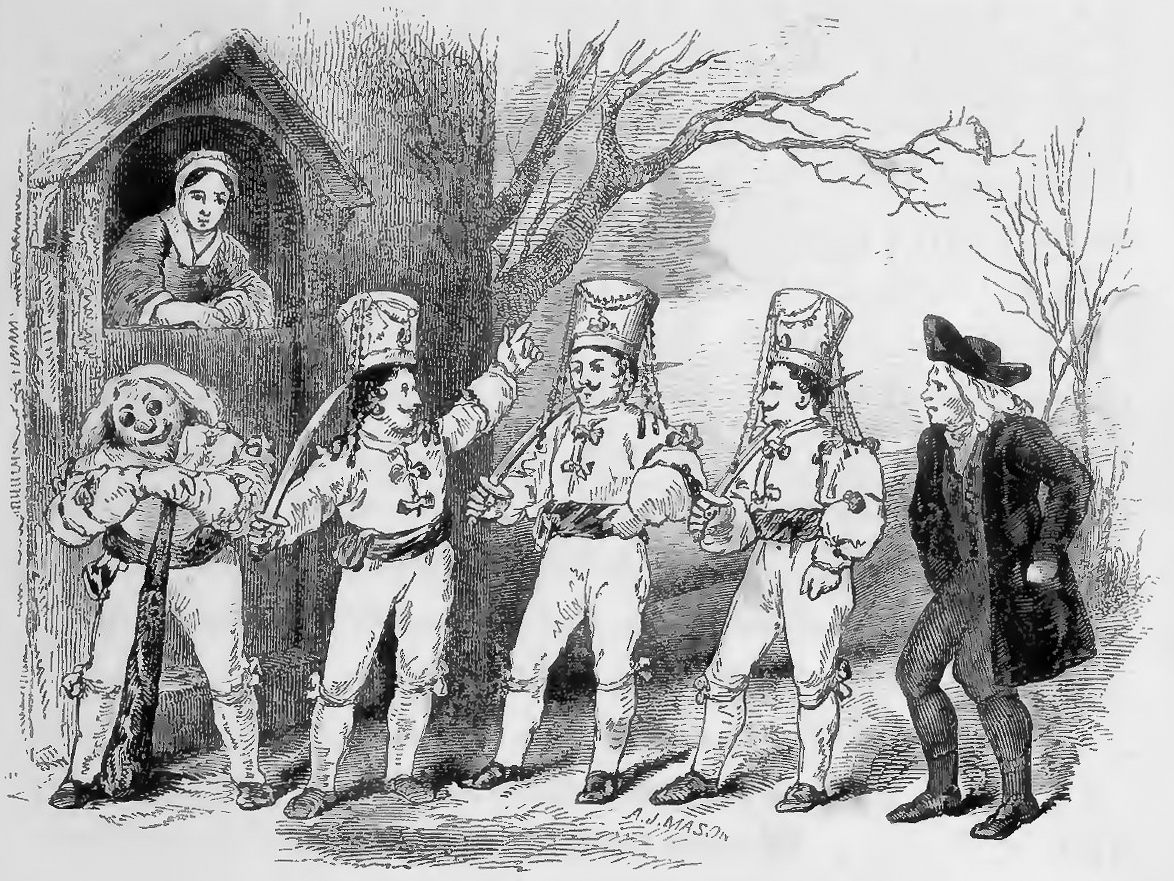


Mummers' plays are folk plays performed by troupes of amateur actors, traditionally all male, known as mummers or guisers (also by local names such as rhymers, pace-eggers, soulers, tipteerers, wrenboys, and galoshins). Historically, mummers' plays consisted of informal groups of costumed community members that visited from house to house on various holidays. The modern term refers especially to a play in which a number of characters are called on stage, two of whom engage in a combat, the loser being revived by a doctor character. This play is sometimes found associated with a sword dance though both also exist in Britain independently. Plays may be performed in the street or during visits to houses and pubs. They are generally performed seasonally, often at Christmas, Easter or on Plough Monday, more rarely on Halloween or All Souls' Day, and often with a collection of money. The practice may be compared with other customs such as those of Halloween, Bonfire Night, wassailing, pace egging and first-footing at new year. Although the term mummer has been in use since the Middle Ages, no scripts or details survive from that era and the term may have been used loosely to describe performers of several different kinds. The earliest evidence of mummers' plays as they are known today is from the mid- to late 18th century. Mummers' plays should not be confused with the earlier mystery plays. Mumming spread from the British Isles to a number of former British colonies. Ireland has its own unique history of mummers' play, and adopted the term for the tradition from the English language.
Read more on Wikipedia >