
Philip VI, King of France, 1293-1350
Enlarge text Shrink text-
 Personality

-
Save successfulThe item can be found in your Personal ZoneשגיאהLog in to your account to save

- Lucien Bély, History of France, 2001:p. 35 (Philip VI, King of France; Philippe de Valois)
- Encyclopedia Britannica, viewed online Nov. 22, 2013(Philip VI; Philip of Valois; Philippe de Valois; b. 1293; d. Aug. 22, 1350; first French king of the Valois dynasty; reigning at the outbreak of the Hundred Years' War (1337-1453))
- Wikipedia, viewed Nov. 22, 2013(Philip VI; Philip of Valois; Philip the Fortunate; b. 1293; d. Aug. 22, 1350; first King of France of the House of Valois; reigned from 1328 until his death in 1350)


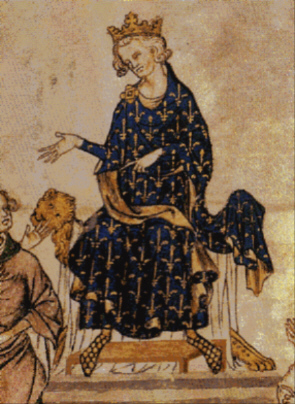
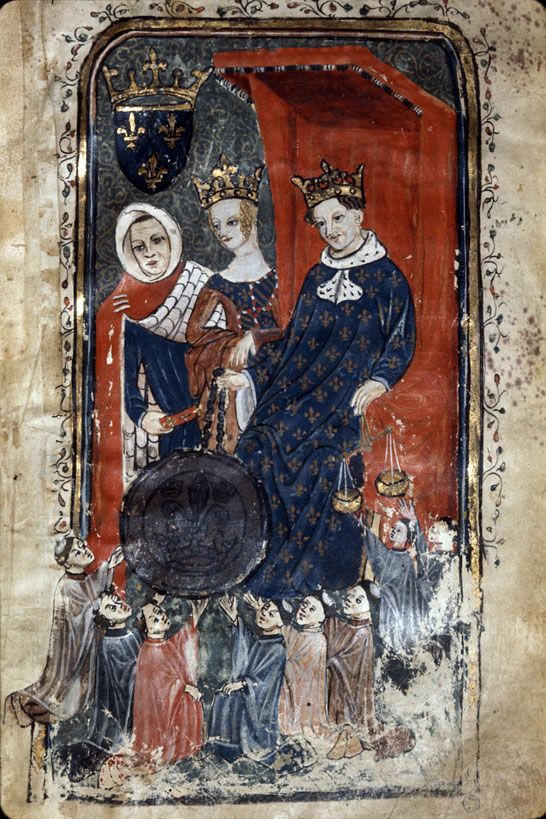

Philip VI (French: Philippe; 1293 – 22 August 1350), called the Fortunate (French: le Fortuné), the Catholic (le Catholique) and of Valois (de Valois), was the first king of France from the House of Valois, reigning from 1328 until his death in 1350. Philip's reign was dominated by the consequences of a succession dispute. When King Charles IV of France died in 1328, his nearest male relative was his sororal nephew, Edward III of England, but the French nobility preferred Charles's paternal cousin, Philip of Valois. At first, Edward seemed to accept Philip's succession, but he pressed his claim to the throne of France after a series of disagreements with Philip. The result was the beginning of the Hundred Years' War in 1337. After initial successes at sea, Philip's navy was annihilated at the Battle of Sluys in 1340, ensuring that the war would occur on the continent. The English took another decisive advantage at the Battle of Crécy (1346), while the Black Death struck France, further destabilising the country. In 1349, Philip bought the Dauphiné of Viennois, a county in the Kingdom of Burgundy (Arles), under the suzerainty of the Holy Roman Empire, thus expanding the French influence beyond the river Rhône. The acquisition was formalized by the treaty of Romans, concluded between Philip and Humbert II, dauphin of Viennois. The province was entrusted to Philip's grandson, prince Charles (future king Charles V). Philip VI died in 1350 and was succeeded by his son John II.
Read more on Wikipedia >