
Smith, Roger B., 1925-2007
Enlarge text Shrink text-
 Personality

-
Save successfulThe item can be found in your Personal ZoneשגיאהLog in to your account to save

- His Building on 75 years of excellence, 1984:t.p. (Roger B. Smith; chairman, General Motors Corp., New York, N.Y.) p. 5 (b. 7-12-25; MBA, Univ. of Michigan, 1949)
- Lee, A. Call me Roger, c1988:CIP t.p. (Roger Smith) publr. info. (Roger Bonham Smith)
- Roger & me, c1990:container (Roger Smith)
- Los Angeles times, via WWW, Nov. 30, 2007(obit. dated Nov. 30, 2007; d. Thursday (Nov. 29, 2007) in Detroit; b. 1925 in Columbus, Ohio)
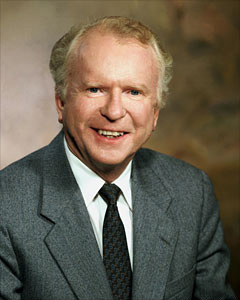
Roger Bonham Smith (July 12, 1925 – November 29, 2007) was the chairman and CEO of General Motors Corporation from 1981 to 1990, and is widely known as the main subject of Michael Moore's 1989 documentary film Roger & Me. Smith seemed to be the last of the old-line GM chairmen, a conservative anonymous bureaucrat, resisting change. However, propelled by industry and market conditions, Smith oversaw some of the most fundamental changes in GM's history. When Smith took over GM, it was reeling from its first annual loss since the early 1920s. Its reputation had been tarnished by lawsuits, persistent quality problems, bad labor relations, public protests over the installation of Chevrolet engines in Oldsmobiles, and by a poorly designed diesel engine. GM was also losing market share to foreign automakers for the first time. Deciding that GM needed to completely change its structure in order to be competitive, Smith instituted a sweeping transformation. Initiatives included divisional consolidation, forming strategic joint ventures with Japanese and Korean automakers, launching the Saturn division, investing heavily in technological automation and robotics, and attempting to rid the company of its risk-averse bureaucracy. However, Smith's far-reaching goals proved too ambitious to be implemented effectively in the face of the company's resistant corporate culture. Despite Smith's vision, he was unable to successfully integrate GM's major acquisitions and failed to tackle the root causes of GM's fundamental problems. A controversial figure widely associated with GM's decline, Smith's tenure is commonly viewed as a failure, as GM's share of the U.S. market fell from 46% to 35% and the company lapsed close to bankruptcy during the early 1990s recession. Smith and his legacy remain subjects of considerable interest and debate among automotive writers and historians.
Read more on Wikipedia >